Massage Tables Are the New Whiteboard: How Istanbul's 24-Hour Spas Are Quietly Powering Breakthrough Thinking
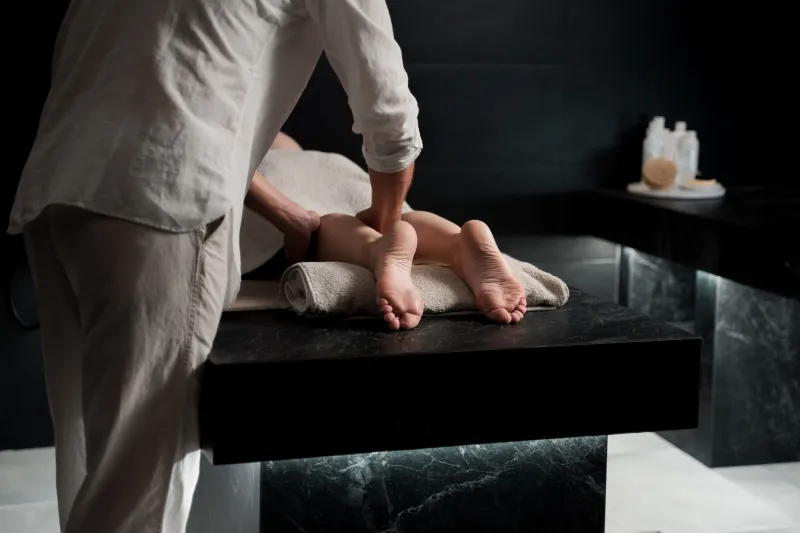
You've probably had the experience: you step away from a problem — into the shower, on a walk, halfway through a meal — and suddenly the answer just shows up. Uninvited, effortless, annoyingly obvious in retrospect. What you probably haven't done is engineer that experience on purpose. A growing number of executives and entrepreneurs passing through Istanbul are doing exactly that, and they're doing it on a massage table.
It sounds a little out there. But the neuroscience is surprisingly solid, and Istanbul's 24-hour spa culture turns out to be a uniquely well-suited environment for this kind of deliberate cognitive reset.
Your Brain on Downtime (It's Not Actually Off)
Here's the thing most productivity culture gets wrong: the brain doesn't stop working when you stop consciously working. What actually happens when you disengage from focused tasks is that your default mode network — the part of your brain associated with imagination, self-reflection, and connecting unrelated ideas — kicks into gear.
Researchers at institutions like MIT and the University of Southern California have spent years studying this network, and the findings are consistent: the DMN is most active not when you're grinding through a to-do list, but when you're in a relaxed, unfocused state. It's the neural architecture behind shower thoughts, highway epiphanies, and yes — ideas that surface during bodywork.
Massage therapy accelerates this shift. Manual pressure applied to muscles triggers a measurable drop in cortisol and a corresponding rise in dopamine and serotonin. Your nervous system downshifts from sympathetic (fight-or-flight) to parasympathetic (rest-and-digest) mode. And when that happens, the prefrontal cortex — the region responsible for higher-order thinking, pattern recognition, and creative problem-solving — actually gets more blood flow, not less.
You're not zoning out. You're tuning in differently.
Why Istanbul Specifically?
Fair question. Massage exists everywhere. So why are we talking about Istanbul?
A few reasons, and they compound each other in interesting ways.
First, Istanbul's spa culture operates around the clock. Istanbul Massage 24 exists because the city genuinely never sleeps when it comes to wellness — there are quality therapeutic options available at 2 AM, 5 AM, whatever unconventional hour fits your schedule. For business travelers operating across multiple time zones, that flexibility is not a minor convenience. It's a strategic asset.
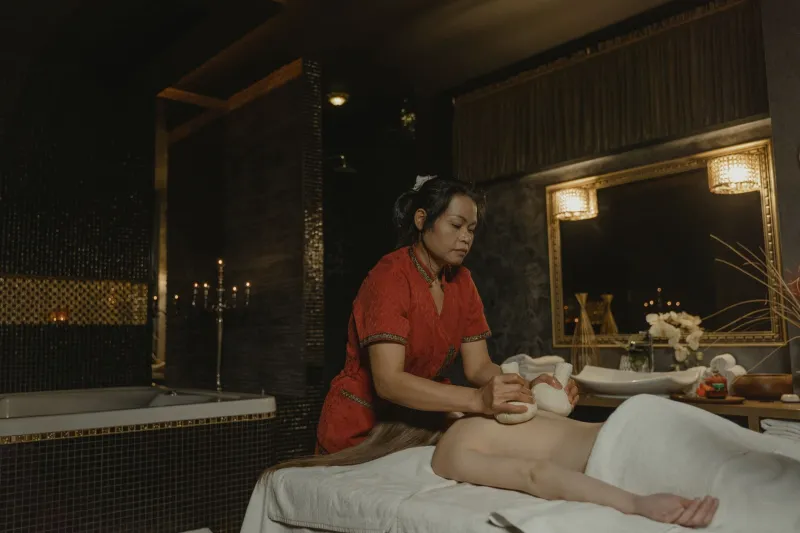
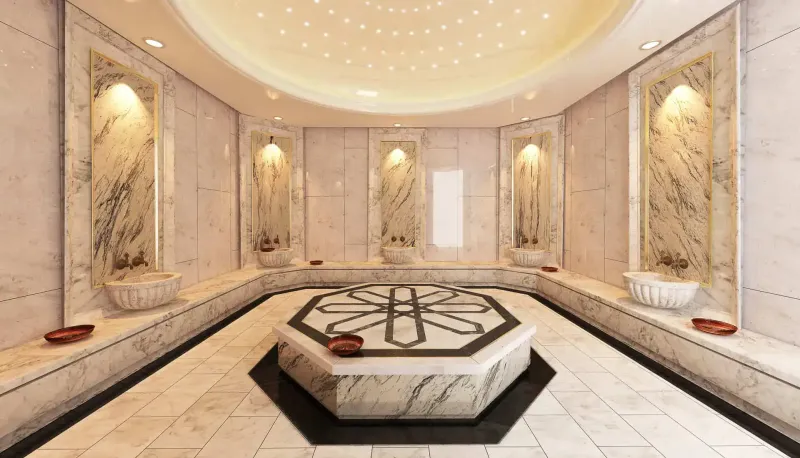
Second, the treatments themselves tend to be more comprehensive than what you'd get from a quick hotel spa session in New York or Chicago. Traditional Turkish massage techniques — rooted in centuries of hammam culture — incorporate sustained, full-body pressure work that goes well beyond surface-level relaxation. The depth of the treatment matters neurologically. Light, superficial massage produces some relaxation response. Deep, sustained work on major muscle groups produces a significantly stronger parasympathetic shift.
Third, and maybe most underrated: the cultural context removes the guilt. American productivity culture has a complicated relationship with rest. Taking a two-hour massage in the middle of a work trip can feel indulgent, even irresponsible. In Istanbul, where hammam culture has always treated bodywork as a serious, practical part of life — not a luxury add-on — there's a different ambient permission structure. You're not skipping work. You're doing something the city has understood for centuries.
The Unconventional Hours Angle
Here's where it gets tactically interesting. The entrepreneurs and executives who've figured this out aren't just booking massages — they're booking them strategically, at hours that align with specific cognitive goals.
Late-night sessions, around 10 PM to midnight, are popular for a specific reason: by that point in the day, the analytical, task-focused left-brain mode has been running for twelve-plus hours. It's fatigued. A 90-minute deep tissue treatment at that hour doesn't just help you sleep better (though it does) — it creates a window where the default mode network can process everything that accumulated during the day. Problems that felt intractable at 4 PM have a way of reorganizing themselves during and after a late session.
Early morning bookings — 5 AM or 6 AM — serve a different function. Before the day's cognitive load builds up, a shorter, lighter treatment can prime the nervous system for a state of relaxed alertness that researchers sometimes call the hypnagogic window. It's the same brain-state associated with that half-awake, half-asleep zone where Thomas Edison famously used to nap with steel balls in his hands (so the clatter when he dropped them would wake him up right at the creative edge). A morning massage can extend and stabilize that state without the need for steel balls.
What This Looks Like in Practice
A few patterns show up repeatedly among high-performers who've integrated Istanbul's spa scene into their work travel routines.
Pre-meeting reset. A 60-minute session the evening before a high-stakes pitch or negotiation. The goal isn't relaxation for its own sake — it's clearing the cognitive debris from travel and preparation stress so you show up with actual bandwidth the next morning.
Mid-trip processing window. On longer trips, a treatment around day two or three serves as a kind of checkpoint. You've absorbed a lot of information, had a lot of conversations, and your brain needs time to sort through it. Scheduling a massage specifically for this purpose — not as a reward, but as a processing tool — is a habit worth building.
Post-decision decompression. After a major decision gets made, the temptation is to immediately move to implementation mode. Experienced operators know that a brief pause — even 45 minutes of bodywork — between decision and execution often surfaces second-order considerations that focused thinking missed.
The Practical Takeaway
If you're coming through Istanbul for business, the 24-hour spa access isn't just a nice perk for tired muscles. It's a cognitive resource that most travelers leave completely untapped.
The research on massage and prefrontal cortex function is real. The default mode network is real. The parasympathetic shift that good bodywork produces is real. What's new is framing these things not as wellness indulgences but as legitimate tools for the kind of thinking that actually moves the needle at work.
Your office has a whiteboard. Istanbul has something considerably more effective. The only question is whether you'll book the session or spend another night staring at your laptop waiting for inspiration that isn't coming.
It's available at 2 AM if you need it.