Hot Marble to Cold Water: Why Istanbul's Ancient Hammam Sequence Outperforms Any Cryo Chamber You've Tried
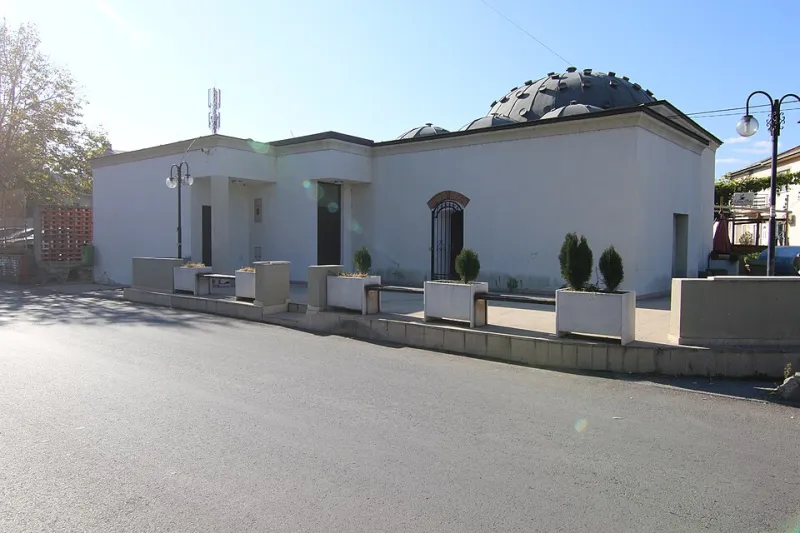
Photo: 44martin88, CC BY-SA 4.0, via Wikimedia Commons
If you've spent any time in American wellness culture lately, you've probably stood in a metal pod while a machine blasted you with nitrogen-cooled air for three minutes and been told your inflammation would thank you. Cryotherapy is having a serious cultural moment. Athletes swear by it. Biohackers schedule it like a vitamin. Wellness centers charge $60 to $90 per session and book out weeks in advance.
And it works — to a degree. The research on isolated cold exposure is real. But there's a growing body of evidence, and a very long history of empirical practice, suggesting that what Istanbul's traditional hammams have been doing for centuries produces immunological and cardiovascular adaptations that a standalone cryo session can't replicate. The difference isn't just temperature. It's sequence, duration, environment, and something harder to measure: the full sensory experience of transitioning between states.
What a Hammam Actually Does to Your Body
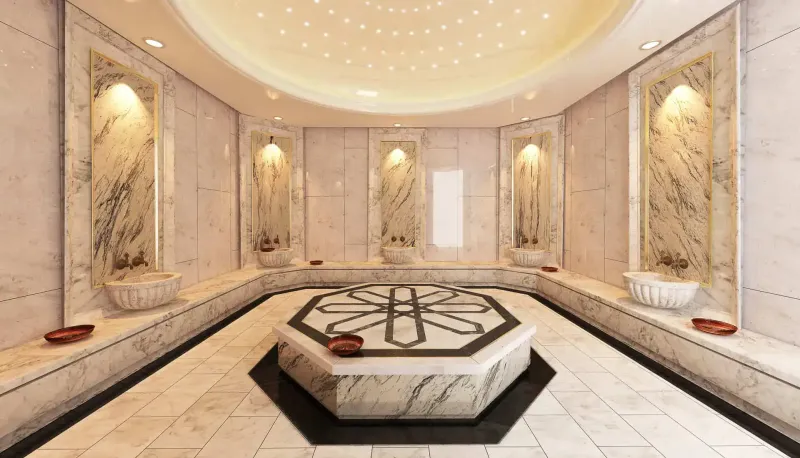
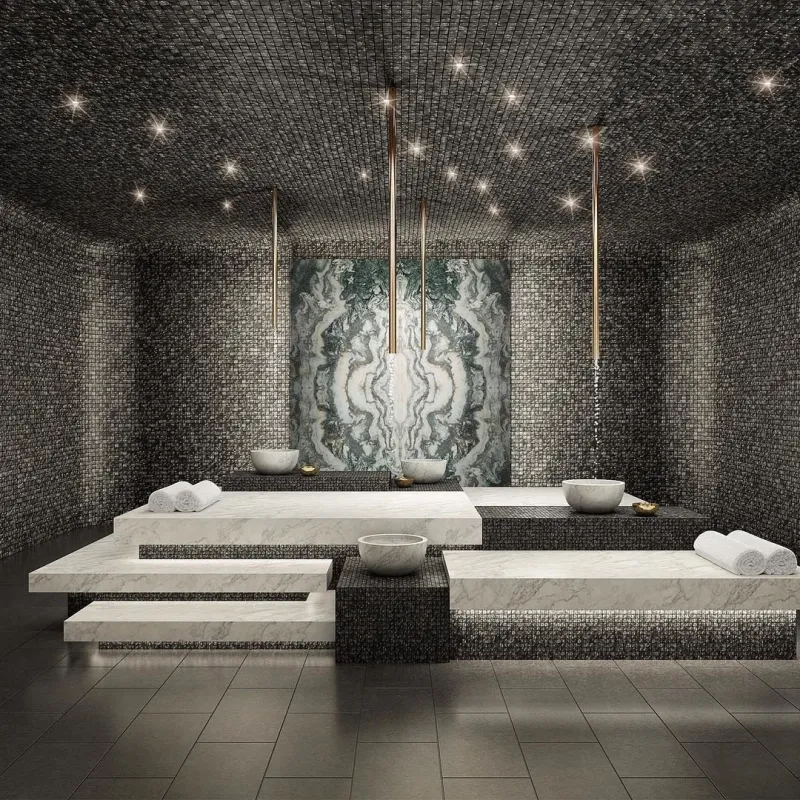
Let's start with the mechanics. A traditional Turkish hammam experience typically moves through distinct thermal phases. You begin in a warm anteroom — the soğukluk — allowing your body to acclimate. Then you move to the hararet, the hot central chamber, where marble surfaces heated from below raise your core temperature gradually over twenty to forty minutes. Steam keeps the air humid, which matters: moist heat penetrates differently than dry sauna heat, driving vasodilation deeper into the peripheral tissues.
After the heated chamber — and after the scrubbing and massage that accompany it — comes cold water. Not a brief splash. A deliberate immersion or dousing that triggers an immediate and dramatic cardiovascular response: vessels that had dilated under heat now constrict rapidly, blood is redirected toward the core, and the sympathetic nervous system fires in a controlled spike.
This sequence — sustained heat, then abrupt cold — is called contrast hydrotherapy, and the physiological literature on it has been building for decades. A 2021 review in the Journal of Science and Medicine in Sport found that contrast water therapy produced greater reductions in markers of exercise-induced muscle damage than cold water immersion alone. But the hammam goes further than most contrast protocols studied in labs, because the heat phase is longer, the transition is more dramatic, and the whole thing happens in a socially and sensorially rich environment that appears to influence the autonomic nervous system in its own right.
Why Cryo Alone Is Only Half the Story
Here's the problem with the cryo-only approach: you're getting the cold without the contrast. Your body enters the chamber already at baseline temperature, experiences a sharp cold stimulus, and then returns to baseline. The sympathetic spike is real. The norepinephrine release is real — studies consistently show a 200–300% increase following whole-body cold exposure. But you're missing the vasodilatory priming that makes the cold response so much more powerful.
Think of it like a rubber band. If you start at neutral and stretch it cold, you get some elasticity. If you first warm and soften the rubber band — expanding the vessels, increasing blood flow, raising tissue temperature — and then apply cold, the rebound is more dramatic. That rebound is where a lot of the cardiovascular and immune benefit lives.
Dr. Rhonda Patrick, a prominent researcher in the wellness space, has written about the importance of heat shock proteins activated during sauna-like heat exposure. These proteins, she argues, play a role in cellular repair and immune surveillance. The hammam's extended heat phase almost certainly activates similar pathways, which means by the time cold water hits, your immune system is already primed and the cold stimulus lands on prepared ground.
Istanbul's Practitioners Have Been Timing This for Generations
What's remarkable about talking to hammam practitioners in Istanbul — particularly in the all-night establishments that serve everyone from jetlagged travelers to local regulars at 3 a.m. — is how precisely they think about sequencing without ever having read a peer-reviewed paper on contrast hydrotherapy.
A senior attendant at a historic hammam near the Grand Bazaar, who asked to be identified only as Yusuf, described the cold water phase this way: "You have to earn the cold. If you go cold without the heat, your body fights it. After the heat, your body welcomes it. That's when it works."
That's a remarkably accurate lay description of what the science says. The heat phase increases blood flow and tissue perfusion. The cold phase then triggers a powerful vasoconstrictive response that, when it releases, creates a secondary flush of oxygenated blood through peripheral tissues. This "pumping" effect is thought to accelerate the clearance of metabolic waste products and inflammatory mediators in a way that cold alone doesn't achieve.
Yusuf also noted something that doesn't show up in most clinical trials: the social dimension. "People relax more in a group," he said. "When you're relaxed going into the cold, your body handles it differently than when you're tense."
He's right about that too. Baseline cortisol levels and psychological stress state meaningfully influence how the body responds to cold exposure. The hammam's communal, unhurried atmosphere — especially in Istanbul's 24-hour venues, where there's no rush-hour crowd and no one checking their phone every ninety seconds — creates a pre-cold psychological state that appears to enhance the physiological outcome.
The Immune Angle
Here's where it gets particularly interesting for anyone who flies a lot or works in high-stress environments. Contrast hydrotherapy has been associated in several studies with increases in circulating natural killer (NK) cell activity — a frontline component of innate immunity. A landmark study out of Germany found that regular cold water exposure following heat led to fewer self-reported sick days over a six-month period compared to control groups.
The mechanism is thought to involve the repeated activation of the sympathetic nervous system during cold exposure, which triggers release of immune-modulating catecholamines. Over time, with regular practice, this appears to train the immune system toward a more responsive baseline — similar in some ways to how regular exercise trains cardiovascular capacity.
The critical word there is "regular." One cryo session won't transform your immune system. But Istanbul's hammam culture offers something US wellness centers rarely do: a compelling reason to show up consistently. The experience is genuinely pleasurable, socially engaging, and available around the clock. Those factors matter for adherence in a way that a sterile nitrogen pod often doesn't.
Why You Can't Fully Replicate This at Home
Cold plunge tubs are selling briskly on Amazon right now. Infrared sauna blankets are everywhere. And yes, doing any contrast practice at home is better than doing none. But the hammam experience resists easy replication for reasons that go beyond equipment.
The marble itself retains and radiates heat in a way that surrounds the body rather than just hitting it from one direction. The humidity keeps mucous membranes hydrated through the heat phase — something dry saunas don't do. The manual exfoliation and massage that precede the cold water phase open the skin's surface and stimulate lymphatic flow in ways that amplify the subsequent cold response. And the sheer duration of the heat phase — often forty minutes or more in a traditional setting — exceeds what most home or gym setups can comfortably sustain.
If you're passing through Istanbul, or planning a trip, the calculus is pretty simple: skip one cryo session back home, and spend that money — and then some — on the real thing. Your immune system, your cardiovascular system, and honestly your nervous system will notice the difference.