Why Istanbul's Hammam Has Become the Unexpected Power Move for C-Suite Travelers
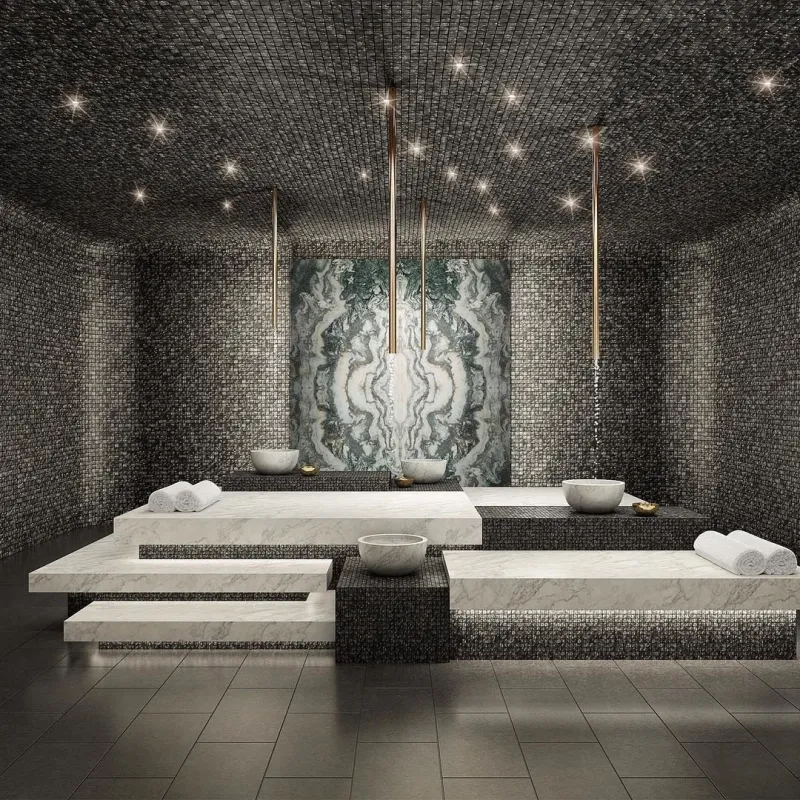
Photo: professional executive relaxing Turkish bath marble slab wellness, via i.pinimg.com
There's a particular type of executive who lands in Istanbul, checks into their hotel, and within two hours is horizontal on a heated marble slab being scrubbed down by a tellak in a centuries-old bathhouse. They're not on vacation. They have a 7 AM call and a full day of meetings starting at nine.
To an outside observer, it looks like an indulgence. To the people doing it, it's closer to maintenance.
The Performance Problem Nobody Talks About in Business Travel
Anyone who travels frequently for work knows the drill. You're managing time zones, client expectations, back-to-back schedules, and the low-grade physical deterioration that comes from too many hours in economy or business class seats, conference rooms with recycled air, and hotel beds that are never quite right.
The standard response is to push through. Grab a coffee, hit the gym if there's time, and white-knuckle your way to the end of the trip. It works, sort of. But it compounds. By day three of a demanding international schedule, most executives are operating on a cognitive deficit they can't fully measure — slower processing, flatter emotional responses, reduced capacity for the kind of creative, adaptive thinking that actually drives good decisions.
This is where Istanbul enters the picture in an unexpected way.
What Neuroscience Says About Deep Physical Recovery
The research on stress and cognitive performance is pretty unambiguous at this point. Chronic stress — the low-to-mid-level kind that business travel generates constantly — degrades prefrontal cortex function. That's the part of your brain handling strategic thinking, impulse control, and reading other people accurately. It's also exactly what you need in a negotiation or a high-stakes presentation.
Massage therapy, and specifically the combination of heat and manual manipulation you get in a traditional Turkish hammam, has been shown to produce measurable reductions in cortisol and simultaneous increases in serotonin and dopamine. These aren't marginal effects. A 2010 study in the International Journal of Neuroscience found that participants who received regular massage showed a 31% reduction in cortisol levels and a significant uptick in both serotonin and dopamine — neurochemicals directly tied to mood stability, motivation, and clear thinking.
For an executive preparing for a critical day of meetings, those numbers aren't spa marketing. They're a performance metric.
Why Istanbul Specifically?
A lot of cities have spas. What makes Istanbul's wellness infrastructure relevant to high-performing travelers specifically?
First, there's the 24-hour access factor. Istanbul has a well-established culture of around-the-clock spa services — a natural outgrowth of being a city that never fully sleeps and has always served travelers arriving at all hours from every direction. For an executive whose schedule doesn't align with standard business hours, this matters enormously. You can decompress at 11 PM after a long dinner with clients, or reset at 5 AM before a breakfast meeting, without fighting the schedule constraints that limit most Western spa facilities.
Second, there's the nature of the hammam treatment itself. Unlike a standard Swedish massage, the traditional Turkish bath experience involves a progression — steam room, exfoliation, foam massage, and a cool-down phase — that systematically cycles your nervous system through activation and recovery states. The heat exposure followed by cooling mimics the physiological pattern of deliberate stress and release, which some sports scientists describe as a form of passive conditioning for the autonomic nervous system.
Third, and maybe most practically: Istanbul is a genuine hub. It's a connecting city for flights between North America, Europe, the Middle East, and Asia. Executives passing through on layovers or regional tours are already there. The hammam isn't a detour. It's a stop on the route.
Building It Into the Schedule Without Losing the Schedule
The executives who integrate Istanbul spa visits most effectively aren't the ones who carve out a half-day of leisure. They're the ones who treat it like any other performance input — allocated time, specific outcome, done.
A realistic format looks something like this: a 90-minute hammam experience starting no later than 10 PM after evening commitments wrap up. The traditional sequence — 20 minutes of steam, scrub and massage, cool-down — is compact enough to fit into the gap between dinner and a reasonable bedtime without sacrificing sleep. The neuroscience on sleep quality post-hammam is also worth noting: the temperature drop your body experiences after leaving a heated marble environment is one of the most reliable natural sleep-onset triggers known to sleep researchers.
Alternatively, some travelers prefer a morning session — 60 to 75 minutes starting around 5:30 or 6 AM — as a cortisol management strategy before a demanding day. The stimulation of circulation and the parasympathetic activation from massage can smooth out the sharp cortisol spike of early morning, producing a calmer, more focused baseline for the hours ahead.
The key is treating it as a non-negotiable slot rather than something you do if there's time. There's rarely time. You make the time because the output justifies it.
The Reframe: Recovery as a Professional Skill
There's still a cultural hangup in American business culture around visible recovery. Taking care of yourself can read as soft, especially in industries that still romanticize the grind. But that framing is shifting, and it's shifting fast.
The most competitive athletes in the world have entire teams dedicated to recovery optimization. Sleep coaches, cryotherapy, massage therapists, nutrition timing — all of it treated with the same seriousness as training. The logic is simple: the better your recovery, the harder and more effectively you can perform during output phases.
Executives operate under a similar model, whether they acknowledge it or not. The question isn't whether recovery matters. It's whether you're being deliberate about it or just hoping your body figures it out on its own.
Istanbul's 24-hour spa culture offers something genuinely rare: a world-class, historically rooted recovery system that's available whenever your schedule allows, not just when it's convenient for the spa.
That's not a luxury. That's infrastructure. And for the executive who figures out how to use it, it's a quiet edge that shows up in every room they walk into.