Night Owl or Early Bird? The Chronobiology Case for Booking Your Istanbul Massage at Odd Hours

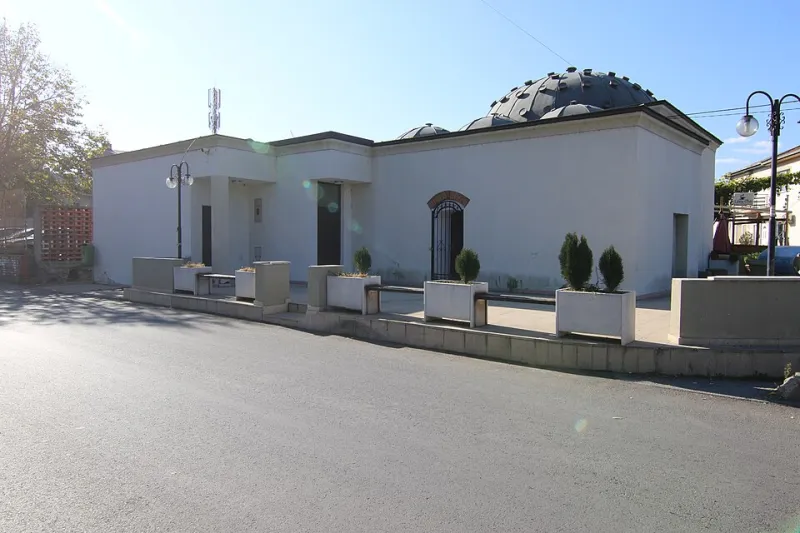
Photo: unidentified, Public domain, via Wikimedia Commons
Most people book a massage the same way they'd book a haircut — whenever there's an opening, whenever it's convenient. But if you've ever landed in Istanbul at midnight, dragged yourself through customs, and wondered whether a late-night spa session is worth it or just indulgent, science has a pretty clear answer: it might actually be the best time to go.
Welcome to the intersection of chronobiology and Turkish wellness culture — a surprisingly practical place to spend some time.
What Is Chronobiology, and Why Should You Care?
Chronobiology is the study of biological rhythms — specifically, how your body's internal clock governs everything from hormone production and body temperature to inflammation response and muscle recovery. Your circadian rhythm isn't just about when you feel sleepy. It's a master scheduler running hundreds of physiological processes on a 24-hour loop.
Here's where it gets interesting for spa-goers: the timing of a massage doesn't just affect how relaxed you feel in the moment. It can influence how deeply your nervous system responds, how efficiently your muscles flush out metabolic waste, and how long the benefits actually last.
Research published in journals covering sports medicine and sleep physiology consistently shows that the body's parasympathetic nervous system — the one responsible for rest, digestion, and cellular repair — becomes more dominant in the late evening and early morning hours. That's the same system that a skilled massage directly stimulates.
The Late-Night Advantage: What Happens After Midnight
Between roughly 10 PM and 4 AM, your body shifts into a repair-heavy mode. Cortisol (your primary stress hormone) hits its lowest point. Growth hormone secretion peaks. Core body temperature drops slightly, which paradoxically makes soft tissue more receptive to manipulation and heat therapy.
For travelers flying into Istanbul from the US — whether you're coming from New York, Chicago, or Los Angeles — you're almost certainly dealing with a significant time zone gap. Istanbul is 7 to 10 hours ahead of US time zones. That means your body's internal clock might read 4 PM even when the local clock says 1 AM. Your stress hormones are still running high. Your muscles are primed for input.
A late-night massage in Istanbul isn't fighting your biology — it's working with the biology you actually have at that moment, not the local time on the wall.
The Hammam Factor: Why Heat Therapy Has Its Own Timing Logic
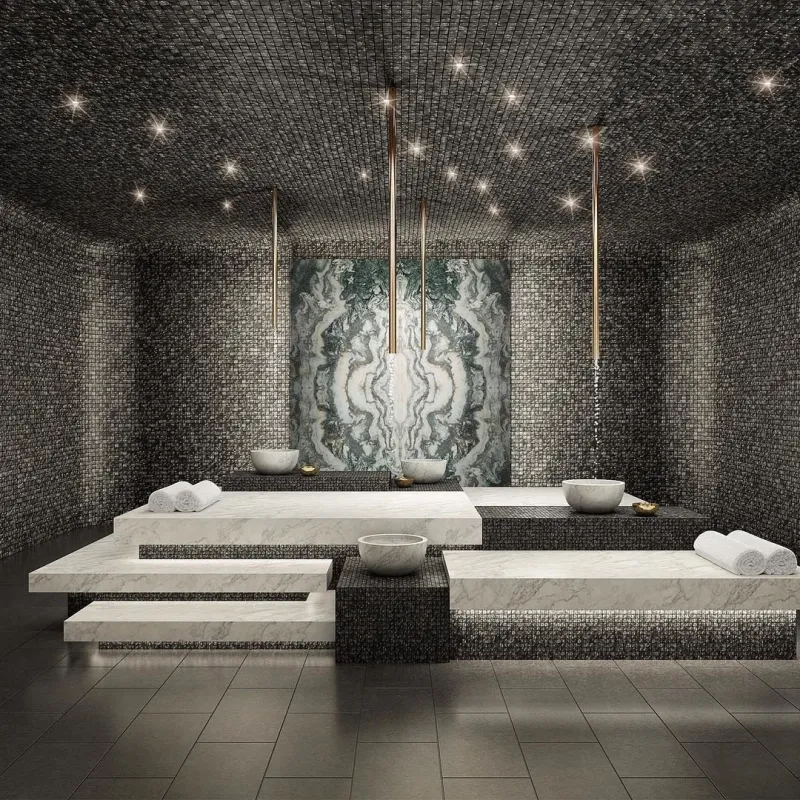
Traditional Turkish hammam treatments add another layer to this conversation. The combination of steam heat, exfoliation, and kneading massage creates a thermal stress response — your blood vessels dilate, circulation accelerates, and lymphatic drainage kicks into a higher gear.
Chronobiologists have noted that the body's thermoregulatory response is especially pronounced during the evening hours. When you expose yourself to a heated hammam environment at night, your core temperature rises and then falls more sharply afterward — a pattern strongly associated with deeper, more restorative sleep. Essentially, a late-night hammam session can function as a biological primer for some of the best sleep you've had since you left home.
For jet-lagged travelers, that's not a small thing. That's the difference between spending your first full day in Istanbul functioning at 60% versus actually being present.
Early Morning Sessions: A Different Kind of Benefit
Not everyone is stumbling in at 3 AM. Some business travelers and early risers hit Istanbul's 24-hour spas between 5 and 7 AM, and there's solid reasoning for that too.
In the early morning, cortisol levels begin their natural rise — it's called the cortisol awakening response, and it's your body's built-in alarm system. For people dealing with chronic stress or high-pressure travel schedules, this morning cortisol spike can feel like anxiety before the day has even started.
A focused massage session during this window — particularly one targeting the neck, shoulders, and lower back — can modulate that cortisol surge, essentially taking the edge off your nervous system before it gets fully activated. You walk into your first meeting calmer, clearer, and with measurably lower baseline tension than if you'd skipped it.
How to Book Strategically Based on Your Body Clock
So how do you actually apply this when you're planning a trip? A few practical guidelines:
If you're flying from the East Coast (New York, Boston, Miami): Istanbul is roughly 7-8 hours ahead. Your body will feel like late afternoon when it's midnight in Istanbul. A massage between midnight and 2 AM local time aligns well with your internal cortisol dip and puts you in a strong position for recovery sleep.
If you're flying from the West Coast (LA, Seattle, San Francisco): The gap is 10-11 hours. Your body clock is running on an entirely different schedule. Don't force yourself onto Istanbul time immediately — work with where your internal clock actually is. A 3 or 4 AM session locally might correspond to peak afternoon alertness back home, making it a great time for a more stimulating treatment like a vigorous scrub and massage rather than a purely sedative session.
If you've been in Istanbul for a few days: Your circadian rhythm has likely shifted. Now you can lean into the science more precisely. Evening sessions (9 PM to midnight) are ideal for parasympathetic activation and sleep preparation. Morning sessions (5-7 AM) work well for cortisol management and mental clarity.
Istanbul's 24-Hour Culture Isn't an Accident
There's a reason Istanbul's spa and hammam scene never really closes. The city has always been a crossroads — a place where people arrive and depart at all hours, carrying the physical and mental weight of long journeys. The 24-hour wellness model didn't emerge from a marketing strategy. It emerged from genuine need.
What chronobiology is now telling us is that this always-open approach isn't just convenient. It's actually more aligned with how human bodies work than the standard 10 AM to 8 PM spa schedule you'd find at most American wellness centers.
Your body doesn't follow a business schedule. It follows a biological one. Istanbul's spa culture, almost by historical accident, built an infrastructure that respects that reality.
So next time you're debating whether to book that 2 AM session after landing, stop thinking about it as a guilty indulgence. Think of it as precision wellness — timed to your biology, not the clock on the wall.