How Doing Absolutely Nothing for 90 Minutes Became the Sharpest Business Move These Founders Ever Made
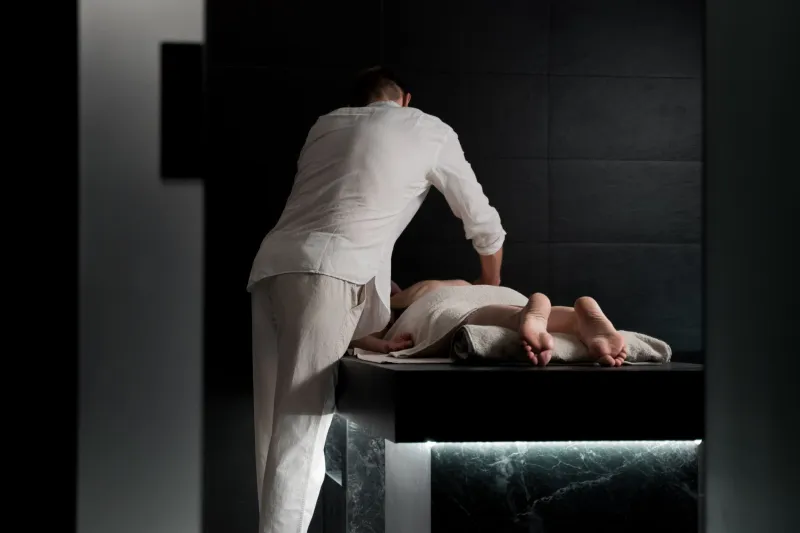
There's a specific kind of guilt that high-achievers know well. It hits somewhere around minute twelve of a massage, when the mental to-do list starts scrolling and the voice in your head whispers, shouldn't you be doing something right now?
For most American professionals, that guilt wins. They mentally draft emails. They replay difficult conversations. They plan Q3 strategy with their face pressed into a foam headrest.
But a growing number of remote workers, startup founders, and road-warrior executives who've spent real time in Istanbul are learning something counterintuitive: the people who fully surrender during a 90-minute session — who genuinely do nothing — tend to walk out making better decisions than the ones who spent the whole time mentally multitasking.
Call it the Istanbul Massage Paradox. The less you try to accomplish on that table, the more you seem to get done afterward.
The Multitasking Trap Nobody Talks About
American productivity culture has a complicated relationship with rest. We've rebranded sleep as a "performance tool," turned meditation into a 10-minute app-based optimization exercise, and convinced ourselves that a working lunch is just smart time management. Even vacations get scheduled with the efficiency of a logistics operation.
What we haven't done is create genuine conditions for cognitive disengagement — the kind where your brain isn't just resting in the background while your hands stay busy. Real disengagement means no inputs. No decisions. No problems to quietly chew on.
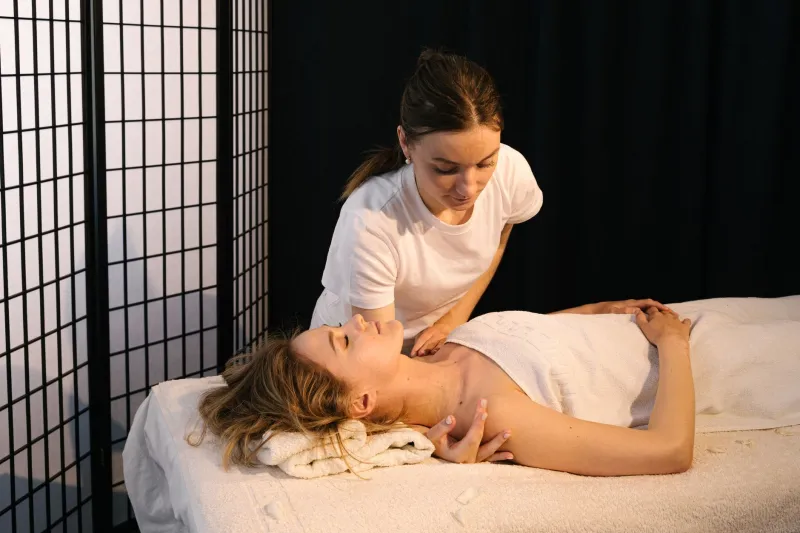
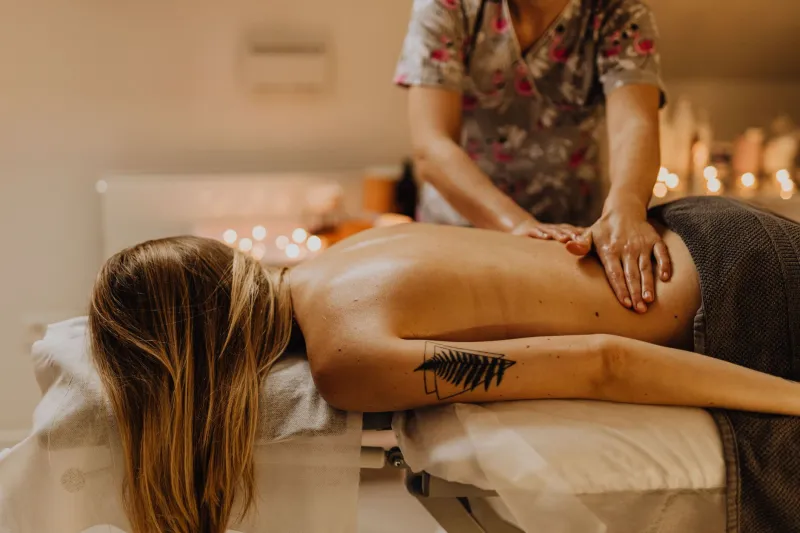
A traditional massage in Istanbul, particularly at one of the city's round-the-clock spa facilities, creates exactly that condition — almost by force. You can't type. You can't scroll. You can't take a call. The environment itself — warm, quiet, unhurried — actively discourages the kind of low-grade mental activity that most Americans mistake for relaxation.
Neuroscientists call the mental state that emerges in these conditions the default mode network activation. It's the cognitive mode your brain slips into when external demands drop away entirely, and it's strongly associated with creative problem-solving, long-range planning, and the kind of insight that tends to show up in the shower rather than in a meeting room.
The shower works because you're not trying. A 90-minute Istanbul massage works for exactly the same reason — except it's longer, deeper, and a lot harder to cut short because you remembered something you need to Google.
What Founders Are Actually Saying
Marcus, a SaaS founder who splits his time between Austin and Istanbul, started booking late-night massage sessions almost by accident. A delayed flight left him with an unexpected evening free, and a hotel concierge pointed him toward a 24-hour spa nearby. He went in skeptical and came out with a solution to a hiring problem he'd been circling for three weeks.
"I hadn't solved it. I hadn't been thinking about it," he says. "But somewhere in that last twenty minutes, it just... appeared. Fully formed. I almost laughed."
He now blocks 90-minute sessions into his Istanbul schedule the same way he blocks board prep. "It's not a treat. It's a work session where I'm not allowed to work. Those are actually the most valuable ones."
Jamila, a UX consultant who works remotely across multiple time zones, describes something similar. She'd been using Istanbul's 24-hour spa access as a jet lag remedy — arriving on late flights and heading straight to a massage before sleeping. The productivity side effect caught her off guard.
"I started noticing that the mornings after those sessions, my thinking was different. Cleaner, somehow. I wasn't just less tired — I was less cluttered." She eventually started scheduling sessions mid-trip, not just on arrival. "There's something about having no option to be productive that actually makes you more productive. It sounds ridiculous until it happens to you."
Why Istanbul Specifically?
This isn't just about massage in general. There are a few things about Istanbul's spa culture that seem to amplify the effect.
First, the 24-hour availability removes the scheduling pressure that quietly undermines relaxation in most Western spa contexts. When you book a 60-minute slot at a boutique spa in Manhattan, there's a low hum of time anxiety from the moment you walk in — you paid a lot, you have limited time, you need to get something out of this. That mental posture is almost the opposite of genuine rest.
In Istanbul, particularly at facilities designed around round-the-clock access, there's no ambient urgency. Sessions at 2 AM carry the same quality and attention as sessions at noon. Nobody is rushing you toward the exit because the next client is waiting in the lobby. The unhurried quality of the experience is structural, not just stylistic.
Second, the traditional techniques used by experienced Istanbul therapists — rooted in Ottoman hammam culture and refined over centuries — tend to work on a deeper physical level than the standardized Swedish massage that dominates American spas. Deeper physical release seems to correlate with deeper cognitive release. When your body genuinely lets go, your mind follows in a way that a surface-level rubdown rarely produces.
Third, and maybe most practically: being in a different city matters. The psychological separation from your regular environment lowers the baseline activation of work-related mental patterns. Istanbul isn't your office. Your inbox doesn't feel as close. The mental distance creates space.
Building It Into the Schedule
For business travelers passing through Istanbul, the practical application is straightforward. Rather than treating a spa session as downtime to squeeze in between real commitments, try flipping the framing entirely: treat the massage as the anchor, and build the rest of your schedule around it.
Book a 90-minute session in the late afternoon or evening — ideally before a major decision, a difficult conversation, or a high-stakes meeting the following morning. Resist the urge to use the session to think through the problem. The whole point is to not think through the problem.
If you're working across time zones and Istanbul's 24-hour access is part of why you're there, lean into the odd-hour scheduling. A midnight session followed by solid sleep often produces sharper morning thinking than any amount of prep work done at the desk.
And when you feel that guilt creeping in around minute twelve — the voice that says you should be doing something more useful — notice it, and let it pass. That discomfort is the whole mechanism. The productivity gain lives on the other side of it.
The Counterintuitive Bottom Line
American business culture has spent decades optimizing for more: more hours, more inputs, more output per unit of time. What it hasn't optimized for is the quality of thinking that only emerges when you stop optimizing entirely.
Istanbul's round-the-clock massage culture, almost accidentally, has built the conditions for exactly that. Not because anyone designed it as a productivity tool — but because a tradition built around genuine rest, available at any hour, ends up doing something that no app, no nootropic, and no productivity framework has quite managed to replicate.
Ninety minutes of doing nothing. It might be the smartest thing on your calendar.