Mid-Massage Epiphanies: The Strange Science Behind Why Istanbul's Therapists Keep Notepads Near the Table
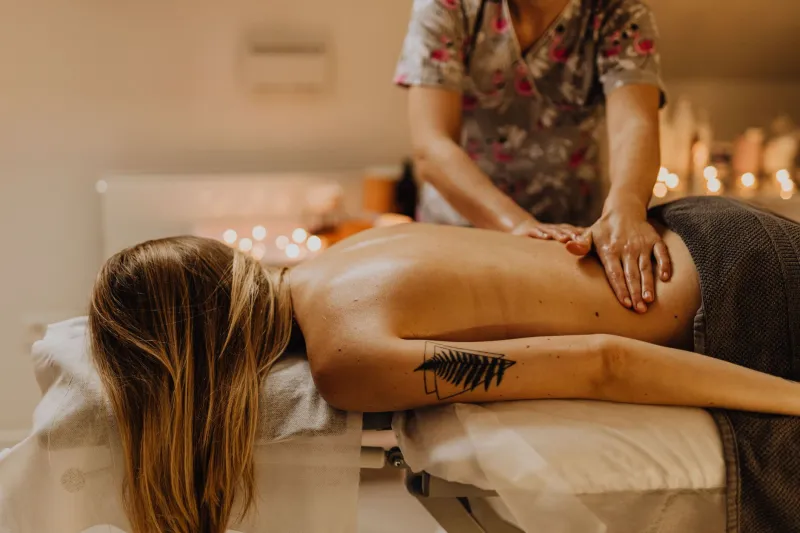
There's a moment — usually somewhere around the 25-minute mark of a deep-tissue session — when something unexpected happens. The internal monologue quiets. The mental to-do list dissolves. And then, out of nowhere, an idea surfaces. A clean, fully-formed idea. The kind you've been chasing for weeks.
If you've ever experienced this on a massage table, you're not alone. Istanbul's round-the-clock spa practitioners have been quietly noticing this pattern for years. Some of them have started keeping small notepads near treatment rooms — not for themselves, but for clients who bolt upright at the end of a session asking, "Do you have something I can write on?"
The question worth asking: why does this keep happening during the massage rather than after it?
Your Brain on Bodywork: It's Not What You Think
Most people assume that the cognitive benefit of massage is a recovery story — you go in tense, you come out relaxed, and the relaxation clears the mental fog. That's partially true. But it's also incomplete, and Istanbul's most experienced therapists will tell you the more interesting thing is happening while you're still on the table.
Here's the short version of the neuroscience: when skilled manual pressure is applied to muscle tissue, your nervous system shifts from sympathetic dominance (the fight-or-flight state most American professionals live in permanently) toward parasympathetic activity. That shift reduces cortisol, which is the hormone most responsible for the tunnel-vision, threat-focused thinking that makes creative leaps nearly impossible.
At the same time, research on the brain's default mode network — the system that activates during daydreaming, mind-wandering, and unfocused thought — suggests it becomes significantly more active when external demands drop away. Massage, particularly the slow rhythmic pressure used in traditional Turkish techniques, appears to create exactly those conditions. The brain isn't asleep. It's actually doing something quite active — just not in the directed, task-focused way we usually demand of it.
The result is something neuroscientists sometimes call a "flow-adjacent" state: not quite flow (which requires active engagement with a task), but a close cognitive cousin where associative thinking runs freely and connections form between ideas that normally live in separate mental compartments.
What Istanbul's Practitioners Are Actually Seeing
Speak to enough therapists working Istanbul's 24-hour spa circuit and a consistent picture emerges. The clients most likely to have a mid-session breakthrough? Business travelers. Specifically, the ones who arrive carrying the most obvious tension — jaw clenched, shoulders basically fused to their ears, the kind of physical presentation that tells a trained therapist exactly what their week has looked like.
One senior practitioner at a well-regarded Beyoğlu spa described it this way: the clients who fight the process — who spend the first twenty minutes mentally running through emails — are actually the ones most likely to experience something dramatic when the release finally comes. The contrast is sharper. When the nervous system finally lets go, the mental shift is more pronounced, and the ideas that surface feel more vivid.
Another therapist, who works overnight shifts at a spa near Taksim Square, mentioned that American and European executives seem particularly prone to this phenomenon. Her theory: people who spend most of their waking hours in high-demand cognitive environments have essentially trained their brains to suppress the wandering, associative mode. When bodywork forcibly suspends the executive function for long enough, the default mode network "catches up" and runs hot.
The Productivity Paradox Nobody's Talking About
Here's what makes this counterintuitive from a productivity standpoint: the conventional wisdom in American work culture is that rest is the recovery mechanism and work is where output happens. You grind, you rest, you return to grinding. The massage, in this model, is a maintenance tool — something that keeps the machine running.
But what Istanbul's practitioners are describing flips that model. The massage itself — the active, mid-session dissolution of directed thought — may be a generative state, not just a restorative one. The ideas aren't arriving because you rested. They're arriving during the process of letting go.
This matters practically. If you're a professional booking a session specifically to decompress before a big pitch or a difficult decision, you might want to reconsider how you're framing the experience. Don't just show up to recover. Show up with a loose mental question — something you've been turning over — and let the session do what it does. Don't force it. Don't try to "think" during the massage. That's the opposite of what works.
Just let the pressure, the rhythm, and the quiet do their thing. The idea will find you.
Practical Notes for the Skeptical Professional
If you're the kind of person who needs this to be actionable (and if you're reading a wellness site at whatever hour it currently is in Istanbul, you probably are), here's a loose framework that Istanbul's therapists have seen work:
Arrive with a question, not an agenda. Before your session, spend two minutes identifying one problem you've been stuck on. Don't try to solve it. Just name it, set it down mentally, and walk in.
Request slower, deeper work in the early phase. The shift from sympathetic to parasympathetic takes time. A rushed, high-pressure opening doesn't create the conditions for what we're talking about. Istanbul's traditional techniques — particularly the long, deliberate strokes used in classical Turkish massage — are well-suited to this because they're paced to match the nervous system's natural settling rhythm.
Don't talk yourself out of the idea mid-session. If something surfaces, let it sit. Don't immediately evaluate it or dismiss it. The critical-thinking brain will have plenty of time to weigh in later. For now, just notice.
Have something to write with immediately after. The post-session window is real — ideas that emerged during the treatment can fade quickly once you're upright, dressed, and back in the world. A voice memo works fine.
Why Istanbul Specifically?
It's worth asking why this phenomenon seems to come up so often in conversations about Istanbul's spa scene specifically, rather than, say, a hotel spa in Chicago or a wellness studio in Austin.
Part of it is access. Istanbul's 24-hour massage culture means you can book a session at 2 AM, after a long conference day, when your nervous system is at peak saturation and the contrast effect of release is most dramatic. That timing matters.
Part of it is technique. The traditional bodywork traditions practiced here — hammam sequences, classical Ottoman massage methods, pressure-point work passed down through generations of practitioners — tend to be slower and more deliberate than the efficiency-focused table work common in American urban spas. Slower work, it turns out, is better at inducing the mental state we've been describing.
And part of it is simply that Istanbul, as a city, has been doing this long enough to notice. The therapists here have seen thousands of sessions. They've watched the patterns. They know what happens around the 25-minute mark. Some of them have started keeping notepads nearby.
Maybe it's time you started thinking of a session here as less of a treat and more of a thinking tool.