Forget the $800 Ice Bath: Why Istanbul's Round-the-Clock Massage Scene Is Quietly Outperforming Silicon Valley's Wellness Stack
There's a certain kind of American entrepreneur who can tell you, without blinking, exactly what his HRV was at 6 AM, how many milligrams of magnesium threonate he took with breakfast, and what his continuous glucose monitor read during his last board meeting. He's spent probably $15,000 this year on wearables, peptides, red-light panels, and a cryotherapy membership he uses twice a month.
He's also exhausted.
Meanwhile, a different kind of operator — quieter, maybe less online — just got back from ten days in Istanbul. She booked a 90-minute deep tissue session at midnight after a brutal string of investor calls. She paid the equivalent of $45. She slept eight hours, woke up clear-headed, and closed a deal before lunch.
Something doesn't add up. Or rather, something adds up very clearly if you're willing to look at it honestly.
The Biohacking Tab Is Getting Expensive
Let's talk numbers, because entrepreneurs respect numbers.
A mid-tier biohacking setup in the US — think a quality HRV monitor, a red-light therapy device, a cryotherapy membership, a decent supplement stack, and maybe a monthly session with a functional medicine practitioner — runs somewhere between $500 and $1,500 per month depending on how deep you go. The premium end of that world, with hyperbaric chambers, IV drip lounges, and personalized longevity coaching, can push well past $3,000 a month.
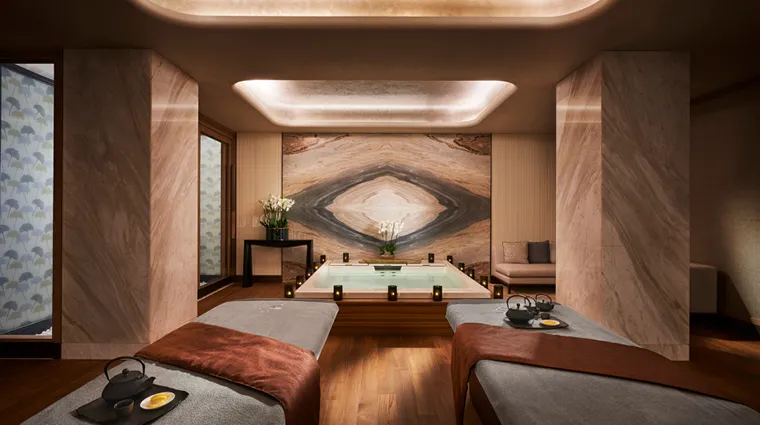
Istanbul's 24-hour spa and massage landscape operates in an entirely different economic universe. Quality therapeutic massage sessions — real work, performed by trained therapists using techniques that have been refined over centuries — routinely run between $30 and $70 USD. The city's hammam culture adds another layer: full-body exfoliation, steam, and bodywork that Western wellness brands would charge $200 for, available here for a fraction of that. And because many of Istanbul's best spas operate around the clock, you're not fighting for a Tuesday afternoon slot. You book when your body actually needs it.
Run that math over a week-long business trip. Even if you indulged in a session every single day, you'd likely spend less than one month of a mid-range American biohacking subscription.
What Wearables Can't Measure
Here's the uncomfortable truth that the quantified-self crowd doesn't love to hear: your Oura ring can tell you that you slept poorly. It cannot tell you why your thoracic spine has been locked up since your red-eye from SFO, or that the tension sitting in your left shoulder is the physical manifestation of three months of compounding deadline stress.
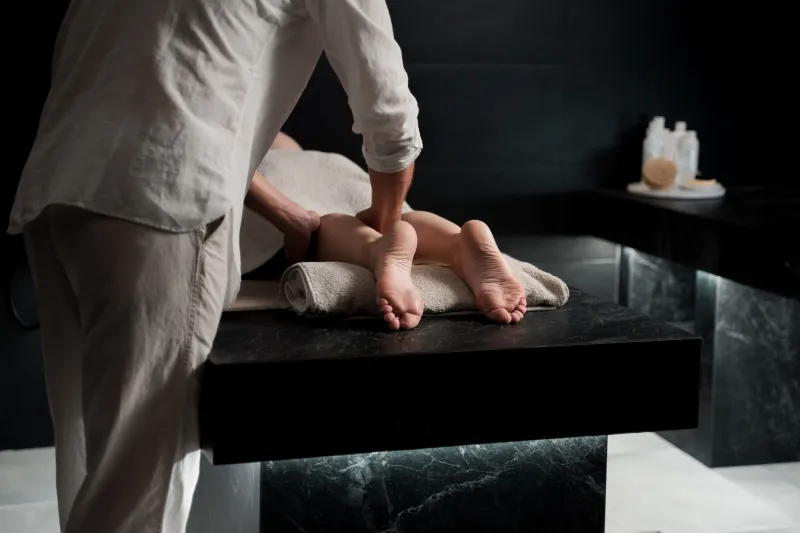
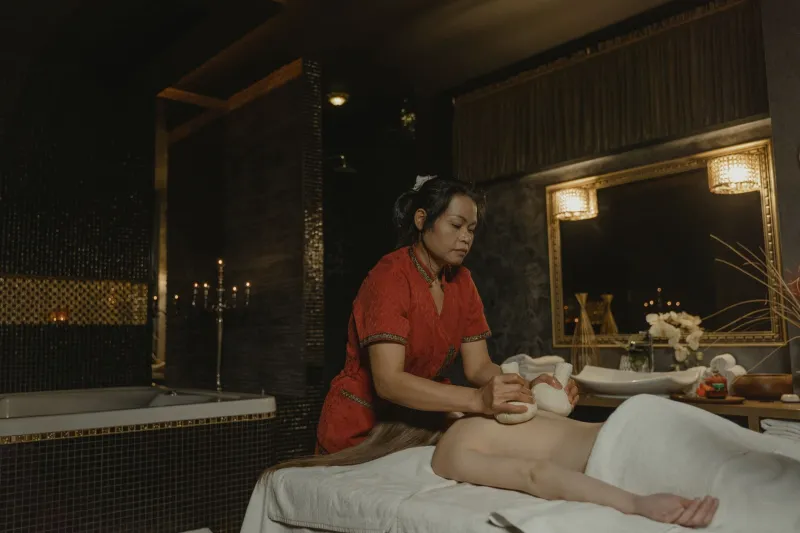
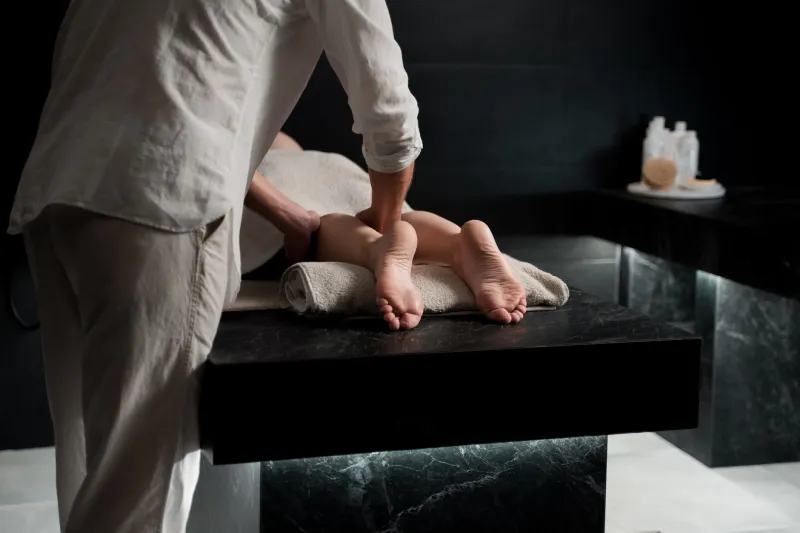
Istanbul's skilled massage therapists work differently. They read the body through touch — identifying adhesions, tracking fascial restrictions, noticing the places where stress has literally taken up residence in soft tissue. This isn't mysticism. It's applied anatomy, and it produces outcomes that no wearable dashboard can replicate.
Businesspeople who've made the comparison often describe the same thing: the clarity that follows a genuinely skilled therapeutic session isn't just relaxation. It's a recalibration. Decision fatigue lifts. Sleep architecture improves. The low-grade cognitive fog that most high-performers have simply accepted as baseline starts to clear.
That's the ROI that's hard to put on a spreadsheet but impossible to miss once you've experienced it.
The 24-Hour Advantage Is Real
One of the most underrated aspects of Istanbul's wellness scene for traveling executives is the timing flexibility. The human body doesn't experience stress on a 9-to-5 schedule, and neither do the demands of international business.
You land at 2 AM after back-to-back transatlantic flights. Your cortisol is elevated, your circadian rhythm is scrambled, and you have a presentation in seven hours. In most American cities, your options at that hour are a hotel minibar and hope. In Istanbul, you can book a session within the hour — a legitimate therapeutic treatment at a proper facility, not a sketchy workaround.
This continuous availability changes the calculus entirely. Recovery doesn't have to wait for the weekend. You don't have to white-knuckle through three days of tension before you can finally get on a massage table. The intervention happens when the body needs it, which is when it's actually effective.
Silicon Valley's biohacking culture is obsessed with optimization, but it often forgets that timing is a core variable. Taking a cold plunge at 7 AM is great. Having access to skilled therapeutic touch at 11 PM after a grueling day of negotiations is arguably more valuable.
What Successful Operators Are Actually Saying
Talk to enough US entrepreneurs who travel through Istanbul regularly and a pattern emerges. They didn't come here for the spa scene — they came for business, or for a conference, or because Istanbul sits at one of the world's great geographic crossroads. But they discovered the wellness infrastructure almost by accident, and now it's a deliberate part of how they travel.
The consistent thread isn't luxury. It's consistency. The ability to maintain a therapeutic bodywork practice without paying Manhattan prices or working around a packed appointment book. The ability to show up to every meeting feeling physically functional rather than held together by caffeine and ibuprofen.
One common observation: the mental clarity benefit compounds. A single massage is nice. A week of regular sessions produces something categorically different — a baseline shift in how the nervous system is operating, how well you're sleeping, how quickly you're processing information.
That's not a wellness perk. That's a performance edge.
The Real Competitive Advantage You're Leaving on the Table
American business culture has gotten comfortable with the idea that wellness costs money — serious money. The expensive supplement protocol, the elite recovery center membership, the biohacker's toolkit. There's a status dimension to it too, if we're being honest. The gear signals seriousness about performance.
But outcomes don't care about optics. And the outcomes available through Istanbul's 24-hour massage and spa culture — at prices that make the whole thing feel almost unreasonably accessible — are real, repeatable, and increasingly well-documented by the people who've actually experienced them.
The biohacking stack has its place. But if the goal is genuine recovery, mental clarity, and physical resilience during high-demand travel, Istanbul's therapeutic massage scene isn't a budget alternative to the good stuff.
It might just be the good stuff — available at midnight, for $47, whenever you need it.
That's a competitive advantage most American professionals haven't figured out yet. The ones who have aren't rushing to tell everyone about it.