Why Your Brain Does Its Best Work in the Two Hours After a Turkish Massage
Somewhere between the third cold brew and the fourth productivity podcast, American professionals collectively decided that peak mental performance was a morning phenomenon. Wake at 5 AM, run six miles, meditate for twelve minutes, journal three gratitudes. Repeat until promoted.
Except a growing body of neuroscience research suggests this entire framework might be backwards — or at least incomplete. The hours that consistently produce the most creative, flexible thinking aren't necessarily the ones that follow your alarm. They're the ones that follow deep physical relaxation. And few things on earth produce that state more reliably than a proper Turkish massage.
The Nervous System Explanation Nobody's Talking About
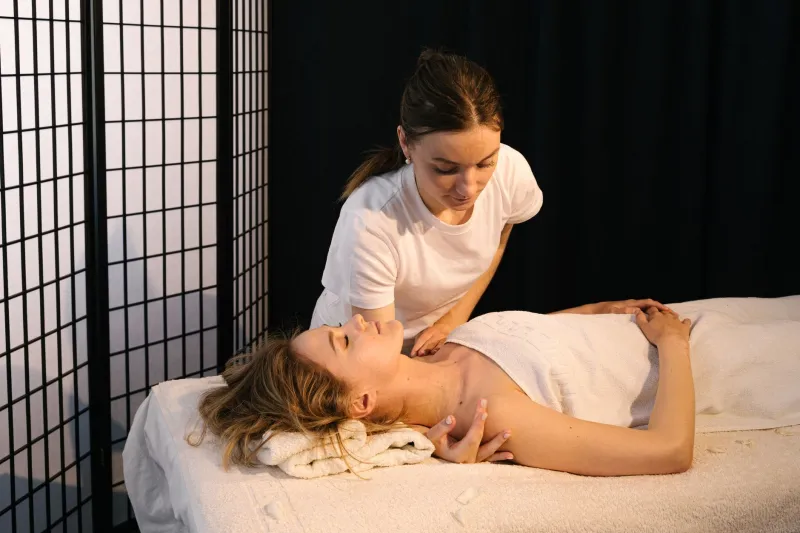
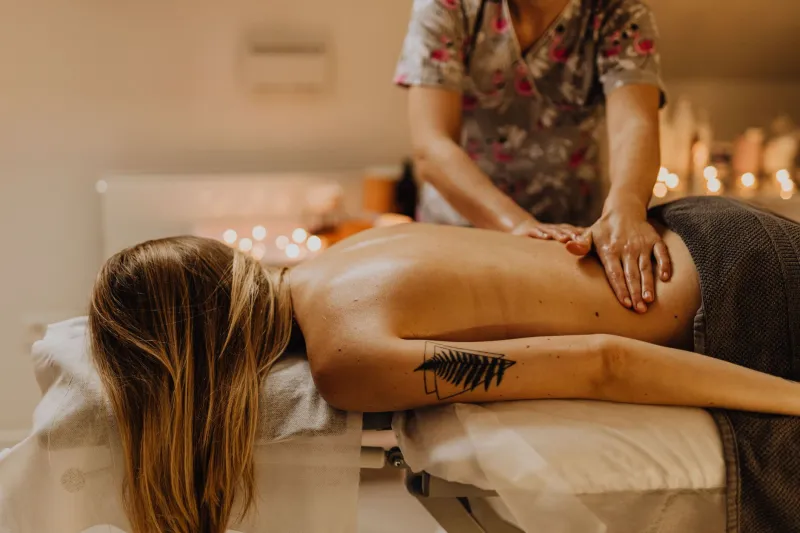
Here's the short version of what happens physiologically when a skilled therapist works deep tissue for sixty to ninety minutes. Your body shifts — sometimes dramatically — from sympathetic nervous system dominance into parasympathetic mode. The sympathetic state is your threat-response system: heart rate elevated, cortisol circulating, attention narrowed to immediate problems. Useful when you're being chased. Less useful when you're trying to connect disparate ideas.
Parasympathetic activation is essentially the opposite. Heart rate drops. Cortisol levels fall. Blood flow redistributes away from large muscle groups and toward the organs, including the brain. Crucially, the prefrontal cortex — the seat of abstract reasoning, creative association, and long-range planning — becomes more metabolically active relative to the amygdala, which handles fear and threat detection.
Dr. Tiffany Field, director of the Touch Research Institute at the University of Miami School of Medicine, has documented this shift repeatedly. Her lab's studies show measurable reductions in cortisol and increases in serotonin and dopamine following massage. Those aren't just mood numbers. Serotonin and dopamine are directly involved in the brain's ability to form novel associations — the neurological foundation of what we casually call "creative thinking."
The morning run produces a different neurochemical cocktail. Endorphins, adrenaline, elevated cortisol. Excellent for motivation and focus on known tasks. Less optimized for the kind of lateral, associative thinking that produces genuinely new ideas.
The Istanbul Variable
What makes Istanbul's massage culture particularly interesting from a cognitive performance standpoint isn't just the quality of the work — though that's considerable. It's the availability.
Istanbul Massage 24 exists because demand for therapeutic bodywork here doesn't follow a 9-to-5 schedule. Business travelers land at Atatürk or Sabiha Gökçen at midnight. Executives finishing a late dinner need somewhere to decompress at 1 AM. The city's wellness infrastructure evolved to meet that reality, and the side effect is that you can engineer your parasympathetic window at almost any hour.
This matters more than it sounds. If the post-massage cognitive window is your most productive two hours, then being able to schedule that session at 11 PM — right before you need to draft a proposal or work through a strategic problem — is genuinely valuable. You're not waiting for Tuesday morning to roll around. You're booking the session when it serves your actual schedule.
Several founders and executives who travel through Istanbul regularly have started treating late-night spa sessions less like indulgence and more like deliberate cognitive preparation. The pattern: arrive at a session carrying a specific problem, spend ninety minutes in skilled hands, emerge into the quiet Istanbul night with a legal pad and two hours of unusually clear thinking.
What High Performers Actually Report
The anecdotal evidence from professionals who've stumbled onto this pattern is remarkably consistent. A venture-backed founder described it this way: "I've tried every productivity tool. The Pomodoro technique, time-blocking, dopamine fasting — I've done all of it. Nothing produces the same quality of thinking as the hour after a really good massage. It's like someone cleaned the whiteboard."
A senior consultant who passes through Istanbul four or five times a year put it differently: "I used to treat the massage as the reward after the work was done. Now I treat it as part of the work. I'll book a session specifically because I need to think through something complex, and I know the two hours after will be unusually productive."
This isn't placebo effect, or at least not entirely. The neuroscience supports the mechanism. When cortisol drops and parasympathetic tone increases, the default mode network — the brain's internal narrative system, active during mind-wandering and creative incubation — becomes more accessible. You're not forcing ideas. You're creating the conditions where they surface naturally.
Why the Morning Run Crowd Hasn't Caught On
The productivity-optimization community in the US has spent enormous energy on the pre-work ritual and almost none on the post-relaxation window. Part of this is cultural: Americans tend to trust effort-based interventions. Running is hard. Cold plunges are uncomfortable. Massage, by contrast, feels like something you do at a resort on vacation — not a serious cognitive tool.
There's also a scheduling problem. A 90-minute massage at 7 AM doesn't fit most American professional routines. But a 10 PM session at an Istanbul spa that stays open all night? That fits a business travel schedule perfectly. The 24-hour availability that feels like a luxury amenity is actually a productivity infrastructure decision.
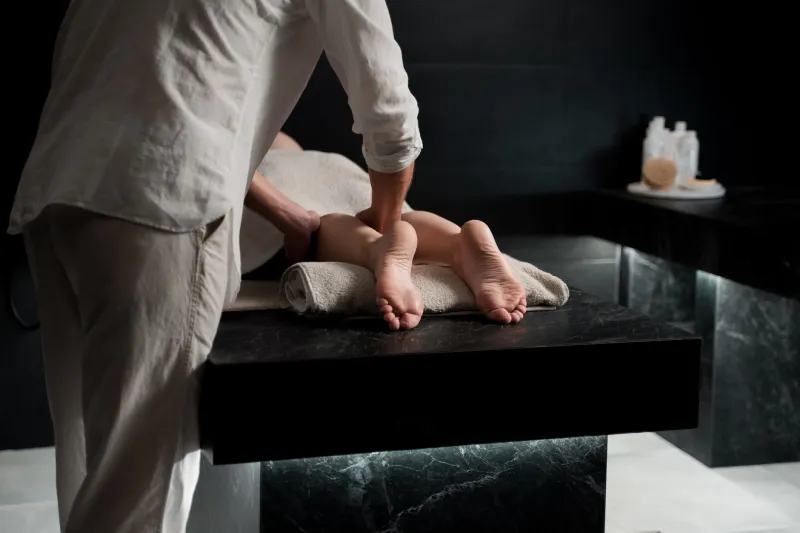
The hammam tradition adds another layer. A proper Turkish bath sequence — steam room, kese scrub, foam massage, cooling down — produces an even more pronounced parasympathetic shift than a standard massage alone. The thermal contrast, the physical exfoliation, the extended horizontal rest: each element compounds the nervous system reset. Many Istanbul spas offer this full sequence at any hour, which means a traveler landing from New York at 11 PM can be in a hammam by midnight and cognitively recalibrated by 2 AM.
How to Actually Use This
If you're passing through Istanbul for business, the practical application is straightforward. Identify the problem or decision you most need to think through clearly. Book a session — deep tissue, hammam, or both — for the evening before you need that clarity. Keep the two hours after the session as unscheduled as possible. Bring a notebook, not a laptop.
The temptation is to immediately fill the post-massage window with emails and Slack. Resist it. The neurochemical state you've just paid to create is genuinely time-limited. Cortisol will creep back. Sympathetic tone will reassert itself. The window closes.
Use it while it's open.
Istanbul's round-the-clock spa culture didn't develop with neuroscience in mind. It developed because a city that never sleeps needed wellness infrastructure that matched. But the accidental result is a cognitive productivity tool that most American professionals haven't discovered — and that Silicon Valley, for all its optimization obsession, hasn't figured out how to bottle.
Your next breakthrough might not come from a better morning routine. It might come from a midnight appointment and two quiet hours in a city that's still wide awake.