Forget Melatonin: How Istanbul's Traditional Pressure-Point Massage Resets Your Body Clock Faster Than Any App
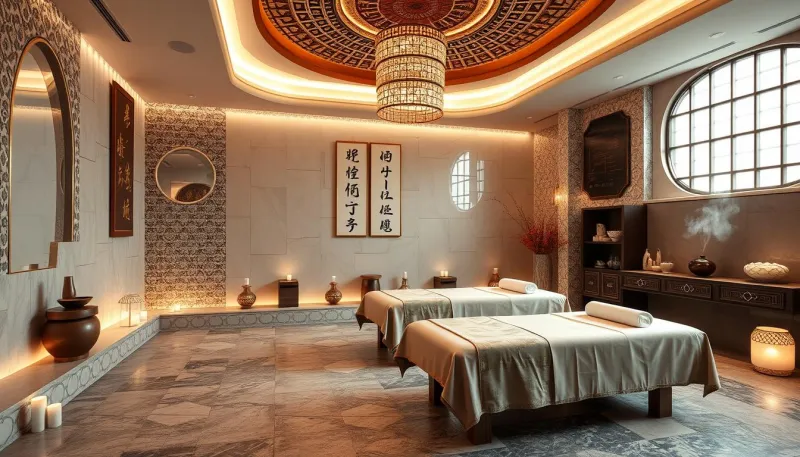
Photo: traditional Turkish massage pressure point therapy relaxation spa, via www.bestbutikmassage.com
You've done everything right. You downloaded the sleep tracker, you packed the melatonin, you avoided the in-flight wine (mostly). And yet, three days into your Istanbul trip, you're wide awake at 3 a.m. staring at the ceiling of your hotel room while your body insists it's lunchtime back in Chicago.
Here's the uncomfortable truth that the wellness tech industry doesn't want you to hear: your nervous system doesn't respond to notifications. It responds to touch.
Istanbul's round-the-clock massage culture has been quietly solving jet lag for centuries — long before anyone thought to gamify sleep cycles with a $14.99 monthly subscription. And as more American travelers are discovering, booking a traditional Turkish massage session within your first 24 hours of landing can do more for your circadian recovery than anything sitting on your phone's home screen.
What Jet Lag Actually Does to Your Body
Most people think of jet lag as just feeling tired at the wrong time. But the physiological reality is messier than that. When you cross multiple time zones rapidly, your body's internal clock — governed by the suprachiasmatic nucleus in your brain — falls out of sync with the external environment. Your cortisol levels spike when they should be falling. Your core body temperature regulation goes haywire. Your digestive system schedules hunger at completely inappropriate hours.
Sleep apps track these symptoms. They measure your heart rate variability, your movement patterns, your breathing. What they can't do is intervene at the somatic level — the level where your nervous system actually lives.
That's where hands-on therapy comes in.
The Somatic Reset Your Nervous System Is Craving
The autonomic nervous system has two primary modes: sympathetic (fight or flight) and parasympathetic (rest and digest). Jet lag essentially locks you into a confused sympathetic state — your body is on high alert because the environmental cues don't match its internal programming.
Deep tissue work and targeted pressure-point therapy are among the most clinically reliable ways to shift that balance. Sustained pressure on specific points along the body — particularly around the neck, shoulders, feet, and lower back — activates the vagus nerve, triggering a parasympathetic response that signals your entire system to downshift.
What makes Istanbul's approach particularly effective isn't just the technique. It's the tradition behind it. Turkish massage therapy, developed and refined over centuries in hammam culture, incorporates a systematic, full-body pressure sequence that Western spa treatments often fragment or abbreviate. The continuity matters. A 90-minute session that moves methodically from scalp to sole isn't just relaxing — it's a complete nervous system recalibration.
Why Timing Your Session Actually Matters
One of the underappreciated advantages of Istanbul's 24-hour spa infrastructure is that you can book your session at the biologically optimal moment — not just whenever the hotel spa has an opening.
Sleep researchers generally agree that the most effective window for resetting your clock after eastward travel is in the late afternoon or early evening of your arrival day. You want to stay awake long enough to align with local nighttime but give your body a genuine relaxation signal before attempting sleep.
A massage session booked between 6 p.m. and 9 p.m. Istanbul time on your first night does exactly that. The parasympathetic activation from the session helps lower your core body temperature — which is the physiological trigger for sleep onset — at the right moment. You're essentially giving your suprachiasmatic nucleus a cue it can actually use.
Compare that to melatonin, which works best when taken at precisely the right dose and timing (most travelers get this wrong), or to a meditation app that requires your already-exhausted prefrontal cortex to stay focused. A skilled therapist does the work for you.
What Istanbul Therapists Know That Sleep Tech Doesn't
Experienced Turkish massage therapists aren't just applying pressure randomly. The traditional sequence used in Istanbul's established wellness centers draws on a body map that identifies zones associated with tension accumulation during long-haul travel — the trapezius muscles that tighten during hours of sitting, the hip flexors that shorten in airplane seats, the occipital base where tension headaches from pressurized cabins tend to collect.
Releasing these specific areas doesn't just feel good. It removes the physical noise that keeps your nervous system in a low-grade alert state. When your body stops sending distress signals from overtightened muscles, your brain gets cleaner data — and cleaner data means a faster reset.
Some Istanbul wellness centers have begun incorporating chronotherapy principles directly into their intake process, asking clients about their departure time zone and flight duration before designing the session. This kind of personalized timing approach is something no app algorithm has managed to replicate with physical results.
A Practical Note for American Travelers
If you're flying into Istanbul from the East Coast, you're typically looking at a seven to ten hour time difference depending on the season. That's significant enough that your first night's sleep quality will largely determine how functional you are for the rest of your trip — whether you're here for business or pleasure.
Skipping the massage and relying on your usual sleep hygiene routine is a reasonable choice. It's just not the fastest one. Istanbul's 24-hour spa access means you don't have to plan this in advance or sacrifice sightseeing time to make it happen. A late-evening session after dinner, available at dozens of wellness centers across the city at any hour, can put you on local time before your first full day even starts.
Your sleep app will still be there in the morning. But your nervous system doesn't need to wait that long.