What Six Days With Istanbul's Round-the-Clock Healers Taught Me That No Wellness App Ever Could
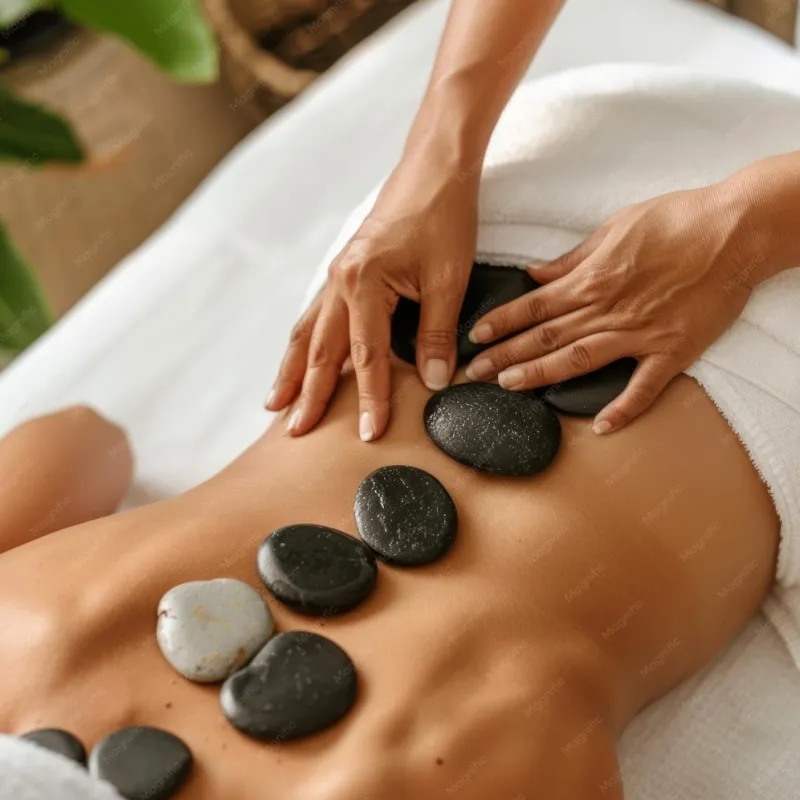
Photo: massage therapist hands on client back in traditional Turkish spa marble room, via img.freepik.com
I've been a licensed massage therapist for eleven years. I own a small practice in Denver, I've taken every continuing education course my state board will recognize, and I genuinely believed I had a solid handle on what therapeutic touch was supposed to accomplish. Then I spent six days in Istanbul, mostly inside its late-night and all-night spas, watching practitioners work — and occasionally being worked on myself — and I came home feeling like a first-year student all over again.
That's not a criticism of American massage culture. It's just honest. There's something happening inside Istanbul's 24-hour wellness spaces that our industry hasn't figured out how to bottle, let alone sell on a subscription app.
The First Thing I Noticed: Nobody Was Rushing
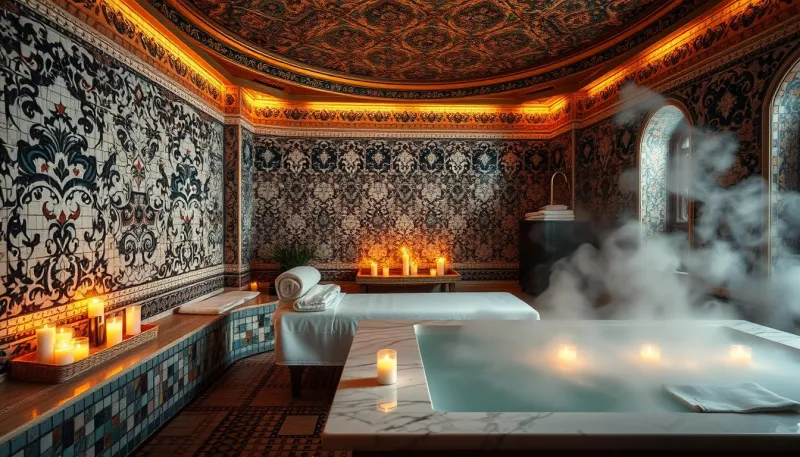
I arrived at a traditional hammam near the Bosphorus on a Tuesday evening, jetlagged and a little skeptical. What struck me immediately wasn't the architecture — though the domed marble room lit by star-shaped skylights is genuinely breathtaking at midnight — it was the pace. The practitioner who worked with me moved with a kind of deliberate slowness that I've only seen in therapists with thirty-plus years of experience. No clock on the wall. No timer buzzing. No front-desk notification system pinging in the background.
Back home, our sessions are engineered around fifty-minute windows. We're trained to deliver specific outcomes within a billable hour. Istanbul's model, at least in the round-the-clock establishments I visited, operates on a fundamentally different premise: the session ends when the work is done, not when the clock says so.
One practitioner I spoke with — a tellak (the Turkish term for a hammam masseur) named Emre, who'd been working the overnight shift for nearly fifteen years — explained it this way: "The body tells you when it's finished. You just have to be quiet enough to hear it." That single sentence reorganized something in my brain.
Pressure Philosophy: Reading the Tissue, Not the Client's Verbal Cues
In American massage training, we lean heavily on client feedback. "Is the pressure okay?" is practically a reflex at this point. And that's not wrong — informed consent and client comfort are non-negotiable. But Istanbul's practitioners have developed a parallel communication system that doesn't depend on language at all.
Emre demonstrated this during a session I observed. He would place his palm flat against a client's back and simply wait — maybe five seconds, maybe ten — before applying any pressure. He was reading the tissue's initial response to warmth and contact before deciding how to proceed. He called this "listening with the hand before speaking with it."
This approach has a real physiological basis. Tissue that's guarded or in active tension responds differently to initial contact than tissue that's relaxed. By waiting before pressing, the practitioner gathers information that no intake form and no wellness app can provide. Your Theragun doesn't wait. Your recovery app doesn't wait. Istanbul's overnight healers do.
The 3 a.m. Client Is a Different Human Being
One of the most surprising things about spending time in Istanbul's all-night spas is learning how differently the body behaves at unconventional hours. The practitioners I spoke with were remarkably consistent on this point: late-night and early-morning clients present with different muscular patterns, different emotional states, and different needs than midday clients.
A therapist named Fatma, who works an overnight rotation at a spa near Taksim Square, told me she thinks of her 2 a.m. clients as people who've "run out of performance mode." The social armor is off. The nervous system has shifted. The body is more honest about where it's holding tension because the brain is too tired to compensate.
"In the daytime, people come in tense and leave tense but feeling better," she said. "At night, they come in tense and actually let go."
This maps onto what we know about circadian shifts in cortisol and sympathetic nervous system activity. But Istanbul's practitioners arrived at this understanding empirically, through decades of hands-on observation, not through research papers. That's a meaningful distinction.
What the Apps Get Wrong
I want to be fair here. Recovery apps, percussive devices, and guided stretching platforms have genuinely democratized access to some wellness tools. Not everyone can fly to Istanbul. But the tech-first American wellness model has a blind spot that my time in Istanbul made impossible to ignore: it treats the body as a system to be optimized rather than a person to be heard.
The best practitioners I encountered in Istanbul's 24-hour spas are doing something closer to a conversation than a procedure. They adjust in real time. They notice when a client's breathing changes. They slow down when the tissue asks them to. They speed up when it invites it. No algorithm does that.
Fatma put it plainly: "The app knows your heart rate. I know your shoulders."
The Technique Differences Are Real
Beyond philosophy, there are concrete technical differences worth naming. Istanbul's traditional kese (exfoliation mitt) technique, applied after steam, removes dead skin in a way that simultaneously stimulates circulation in the superficial fascia — a layer that most Western modalities underwork. The soap foam massage that follows uses a pillowcase-sized linen bag to create a kind of low-pressure sensory envelope around the body, which appears to activate the parasympathetic response faster than conventional effleurage.
The sequencing matters enormously. Heat, then exfoliation, then foam massage, then targeted pressure work, then cool water. It's not arbitrary. Each phase primes the tissue for the next. American spas often offer these elements à la carte, which misses the cumulative effect entirely.
What I Brought Home
I've made three changes to my Denver practice since returning. First, I've started sessions with thirty seconds of non-pressured contact — just warmth and presence — before I begin any actual work. My clients can't articulate why, but several have said sessions feel "different" in a good way. Second, I've stopped asking about pressure every five minutes and started trusting my hands more. Third, I've been experimenting with temperature sequencing: warm towels before deep work, cool towels after.
None of these are revolutionary. They're just things Istanbul's all-night practitioners have been doing for generations. Sometimes the oldest playbook is the one worth studying.