Sleeping Through Istanbul Won't Fix Your Jet Lag — Here's What Actually Will
You land at Atatürk or Sabiha Gökçen somewhere between exhausted and completely wrecked. Your body thinks it's 3 AM Eastern time. Istanbul is eight or nine hours ahead. The hotel bed looks like salvation. You pull the blackout curtains, set your phone face-down, and surrender.
Here's the uncomfortable truth: that move might be the worst thing you can do.
Sleeping more isn't always the same as recovering faster. And if you've ever spent the first two days of an Istanbul trip in a groggy, disoriented haze despite logging nine or ten hours of sleep, your body was already trying to tell you that.
The Paradox Nobody Tells You at the Gate
Jet lag isn't really about being tired. It's about your internal clock — your circadian rhythm — being out of sync with the local environment. That clock is regulated by a cluster of neurons in your brain called the suprachiasmatic nucleus, and it takes its cues from light, temperature, activity, and, critically, social timing. When you pile on extra sleep in a dark room, you're essentially asking your brain to stay in the timezone you just left.
Chronobiology researchers have been chipping away at this for years. The core finding is consistently uncomfortable for sleep-maximizers: passive rest in isolation doesn't reset your circadian rhythm. It just delays it. Your body needs anchoring cues — what scientists call zeitgebers, or "time-givers" — to recalibrate. Light exposure is the most studied. But physical stimulation, temperature shifts, and manual pressure on the body's nervous system are increasingly recognized as meaningful signals too.
That's where Istanbul's 24-hour wellness culture quietly becomes one of the most biologically useful things available to a jet-lagged American traveler.
What Happens to Your Body in the First 24 Hours
When you fly from the US to Istanbul, you're crossing roughly eight to ten time zones depending on your departure city. Your cortisol curve — the hormone that governs alertness and energy — is completely inverted relative to local time. You feel alert at midnight and foggy at noon. Your digestion is off. Your inflammation markers spike from cabin pressure and dehydration. Your lymphatic system, which relies partly on movement to circulate, has been sitting still in a pressurized metal tube for ten-plus hours.
The instinct to sleep more is actually your stress hormones talking. Cortisol spikes in novel, disorienting situations. Sleep feels like the safest response. But for circadian recalibration, the research increasingly points toward timed physical intervention as more effective than additional horizontal time.
A 2019 study published in the Journal of Physiology found that physical activity timed to the new local schedule accelerated circadian phase shifting more reliably than extended rest. The mechanism isn't complicated: movement generates heat, triggers neurotransmitter release, and creates the kind of physiological arousal your brain uses to anchor time-of-day.
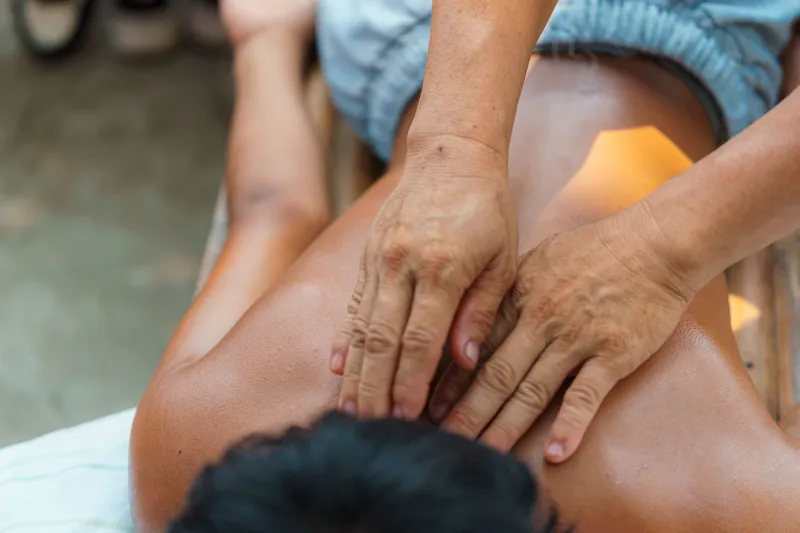
Manual massage therapy adds another layer to this. Skilled pressure work activates the parasympathetic nervous system — the "rest and digest" mode — in a controlled, targeted way that passive sleep doesn't replicate. You're essentially giving your nervous system a guided recalibration rather than leaving it to sort itself out alone in a dark room.
Why 3 AM in Istanbul Might Be Your Best Move
Here's where Istanbul Massage 24's whole reason for existing starts to make a lot of sense.
If your body clock is still on Chicago or Los Angeles time, 3 AM local Istanbul time might be your 6 or 7 PM physiologically. You're not going to sleep anyway — not really. You're going to lie there scrolling your phone, half-awake, accumulating more cortisol and calling it rest.
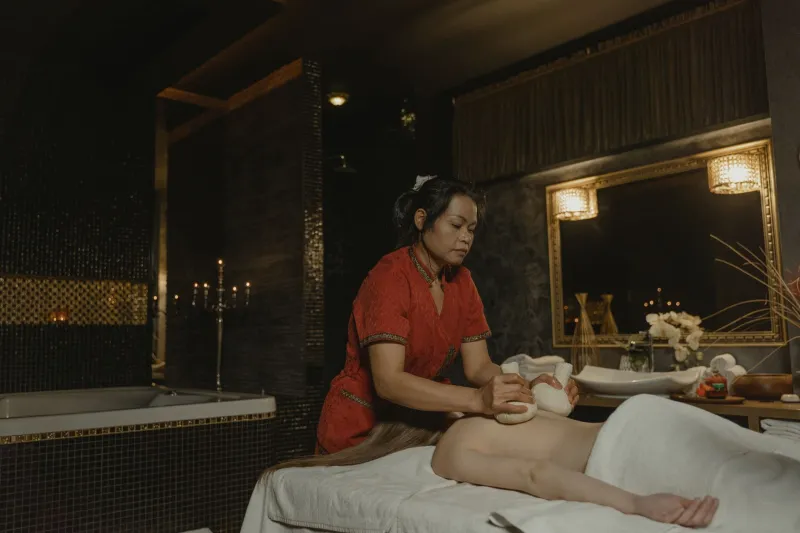
Instead, consider what a 60-minute deep tissue or traditional Turkish massage does to your system at that hour. The manual pressure increases local circulation, moves lymphatic fluid that's been stagnant since your flight, and signals to your nervous system that something active and real is happening in this timezone, at this hour. You're not just passing time — you're giving your brain a zeitgeber.
The therapists working Istanbul's overnight spa shifts have seen this pattern hundreds of times. They'll tell you the guests who come in at odd hours, work through a treatment, and then go to sleep afterward consistently report faster adjustment than the ones who went straight to bed from the airport. That's not anecdote dressed up as science — it lines up with what chronobiologists have been documenting about timed physical intervention.
The Hammam Factor
If there's one element of Turkish wellness culture that's uniquely positioned to help with jet lag, it's the hammam sequence. Hot marble, steam, cold rinse, rest. That thermal cycling — moving between heat and cold — is a powerful autonomic nervous system stimulus. Your vascular system dilates and contracts. Your core temperature shifts. Your body has to respond and adapt in real time.
Thermal contrast therapy has been studied as a circadian intervention in athletes managing time-zone travel, and the results are consistent: it accelerates phase shifting when timed strategically. Istanbul's traditional hammam isn't a luxury add-on. For a jet-lagged traveler, it's closer to a biological reset button.
The key word there is timed. Walking into a hammam at noon local time when your body thinks it's 3 AM is going to feel different than going in the evening when your local clock and your body clock are starting to converge. Pay attention to that window — usually somewhere between day two and day three — when your internal time starts catching up to Istanbul. A well-timed hammam session in that window can snap the transition faster than anything you'd find in a US wellness center.
A Practical Framework for Your First 48 Hours
This isn't about skipping sleep entirely. It's about being strategic with how you use rest versus active recovery.
Hours 1–6 after landing: Resist the urge to immediately crash. Get outside if it's daylight. Hydrate aggressively. If it's nighttime locally, a light massage focusing on the legs and lower back will start moving the fluid that accumulated during your flight without fully activating your system.
Hours 6–18: If you sleep, aim for a natural local sleep window rather than a marathon session. Cap it at seven hours if you can. Set an alarm.
Hours 18–36: This is where the 24-hour access becomes genuinely useful. If you're awake at 2 or 3 AM local time — and you probably will be — don't fight it with melatonin and blackout curtains alone. Book a session. A 60-minute treatment at that hour is more productive than another hour of restless non-sleep.
Hours 36–48: By now, your circadian rhythm should be starting to anchor. A hammam session timed to the late afternoon or early evening of your second full day can lock in the adjustment.
The Bigger Picture
American wellness culture is obsessed with sleep optimization — and for good reason. Sleep is foundational. But the fixation on more sleep as the universal answer to fatigue has a blind spot, and jet lag exposes it. Sometimes your body doesn't need more rest. It needs better signals.
Istanbul happens to have an infrastructure built around exactly that, running around the clock, staffed by people who understand the mechanics of physical recovery at a level that most US hotel gyms and wellness centers don't come close to matching. That's not a coincidence. It's centuries of accumulated practice meeting a very modern problem.
Next time you land in Istanbul feeling like your body is three timezones behind your passport, consider that the answer might not be behind the blackout curtains. It might be one floor down, in a room that smells like eucalyptus, at 2 in the morning.