Why American Spas Are Accidentally Trapping You in a Wellness Dead End
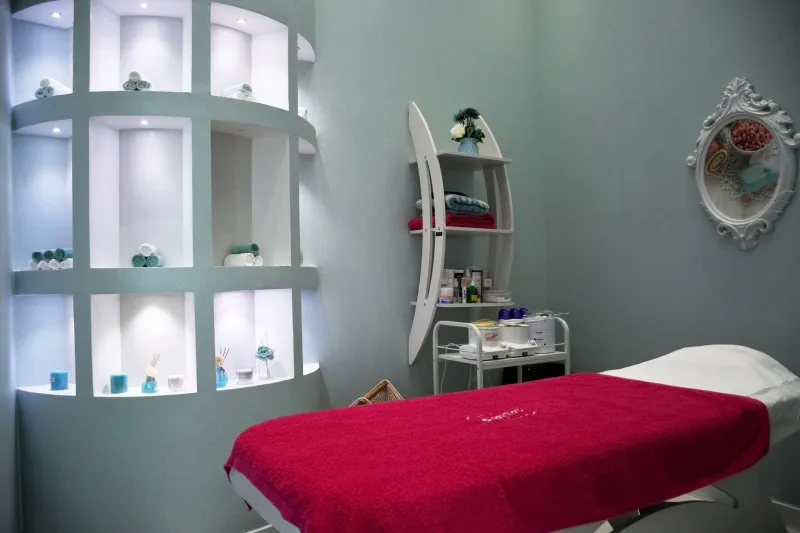
Here's a thought experiment. You're exhausted — genuinely, bone-deep tired — and you finally decide to do something about it. You pull up your favorite spa's booking app, and you're confronted with a grid of time slots: 10 AM, 11 AM, 2 PM, 4 PM. Maybe a 6 PM if you're lucky. You pick one, show up, get your massage, tip 20 percent, and leave.
Did you feel better? Probably a little. Did you feel transformed? Almost certainly not.
Now consider what that same process looks like in Istanbul. You arrive at a spa at 11:30 PM after a brutal transatlantic flight. Your shoulders are locked, your gut is off, and your nervous system is running about three time zones behind your body. You don't pick a slot from a dropdown menu. You describe how you feel. And then something actually happens.
The difference isn't that Istanbul spas are open later. It's that the entire model is built around a different assumption about what wellness is supposed to do.
The Slot Economy Is Not Your Friend
American spas — and really, the American wellness industry broadly — have built themselves around a fundamentally commercial logic. Time slots exist to maximize revenue per square foot. A 50-minute massage at 2 PM on a Tuesday is worth the same to the business as one at 8 PM on a Saturday. So the goal becomes filling every slot, every day, and calling that success.
The problem is that your body doesn't work on a revenue optimization schedule.
There's a growing body of chronobiology research that makes this uncomfortably clear. Your cortisol levels, your pain sensitivity, your muscle tissue's capacity to respond to manual therapy — all of it fluctuates across a 24-hour cycle. A deep-tissue session at 2 PM on a sleep-deprived nervous system lands completely differently than the same session at 8 PM when your parasympathetic system has started to wind down for the night. Same therapist, same technique, same room. Wildly different outcomes.
American spas, for the most part, don't build this into their model. They can't afford to. The slot economy demands uniformity.
What 24-Hour Access Actually Teaches You
When you first hear that Istanbul has legitimate, high-quality massage and spa services available around the clock, the American brain immediately frames it as a convenience feature. Oh, so I can go at midnight if I want. That's not wrong, exactly, but it misses the more important implication.
Constant availability changes your relationship with decision-making. When you know a 3 AM appointment is genuinely possible — not a desperate last resort at some sketchy strip-mall spot, but a real, skilled therapeutic experience — you stop making wellness decisions based on scarcity. You stop booking the 10 AM slot on Saturday because it's the only one left before your next work trip. You start asking a different question: When does my body actually need this?
That shift sounds small. It isn't. Scarcity-driven decision-making in wellness is one of the most underappreciated sources of poor outcomes in the industry. People book appointments when slots are available, not when their bodies are ready. They rush through intake forms because they're already running late. They leave sessions without integrating the work because they've got a lunch reservation in 45 minutes.
Istanbul's model — at its best — inverts this. The availability is constant, so the decision can be made on biological terms instead of logistical ones.
The Paradox at the Center of All This
Here's where it gets genuinely interesting, and a little counterintuitive.
You might assume that round-the-clock availability would create its own paralysis — the wellness equivalent of a Netflix library so large you spend 40 minutes choosing and then watch something you've already seen. More options, more confusion, worse outcomes.
In practice, the opposite tends to happen, but only when the service is designed around the why of each visit rather than the when. Istanbul's better spas don't just stay open all night and call it a day. They staff therapists who specialize in post-flight recovery differently from those who focus on deep-tissue work for chronic tension. They understand that someone walking in at 2 AM probably has a specific physiological story, and they meet it accordingly.
American spas, by contrast, have largely collapsed that nuance into a menu of modalities — Swedish, deep tissue, hot stone — that tells you almost nothing about what your body actually needs on a given day, at a given hour, after a given experience.
What Business Travelers Keep Getting Wrong
For the frequent flyer crowd — the consultants, the executives, the sales directors logging 150,000 miles a year — this distinction is especially costly. These are people who understand optimization in their professional lives with real sophistication. They track sleep scores, they know their resting heart rate, they've experimented with everything from red light therapy to cold plunges.
And then they book a 60-minute Swedish massage at whatever time their hotel concierge could get them in, because that was the only slot available before their 8 AM presentation.
The Istanbul model offers these travelers something genuinely valuable: the ability to align therapeutic intervention with biological readiness. Land at Atatürk at 1 AM with a destroyed circadian rhythm? There's a therapist who specializes in exactly that state, available right now, who isn't going to run you through a generic relaxation routine designed for someone who drove 20 minutes from the suburbs on a lazy Sunday.
That specificity is the product. The late-night hours are just the delivery mechanism.
A Different Way to Think About Choice
The American wellness industry has spent the last decade expanding choice — more modalities, more add-ons, more membership tiers, more booking windows — without questioning whether more choice actually produces better outcomes. In many cases, it doesn't. It produces analysis paralysis, rushed decisions, and sessions booked for the wrong reasons at the wrong times.
Istanbul's 24-hour spa culture doesn't solve this by limiting choice. It solves it by changing the frame entirely. When you can go anytime, the question of when becomes a real question — one worth thinking about, one that connects to how you actually feel and what your body genuinely needs.
That's not a scheduling feature. That's a wellness philosophy.
And it might be the most quietly radical thing happening in the global spa industry right now.