The 4 A.M. Recovery Gap: What Istanbul's All-Night Spas Teach US Shift Workers About Rest

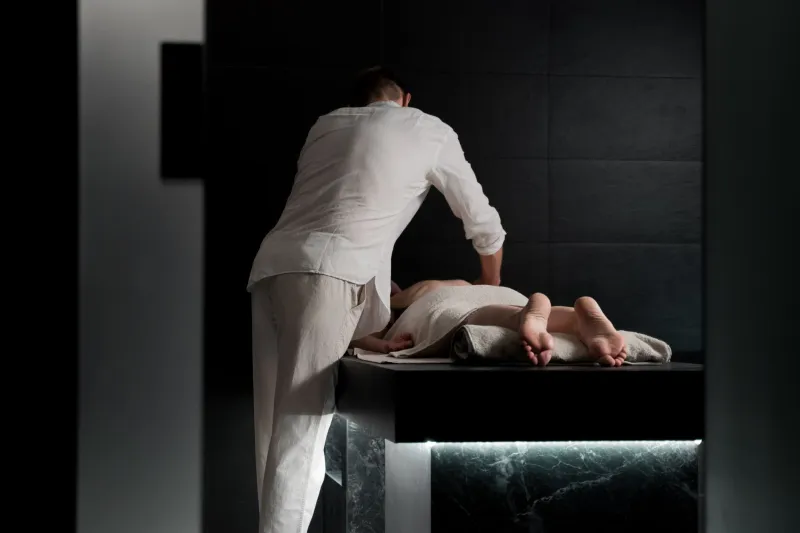
Photo by Photo by Valentin Lacoste on Unsplash on Unsplash
At 4 a.m. in most American cities, the recovery options are grim. The gym is closed. The massage studio is closed. The only thing open is a convenience store and maybe a diner. If you just finished a twelve-hour nursing shift, a fire rotation, or a night of remote work for a company three time zones ahead, your body is asking for something that the market says should happen between 9 and 6, preferably on a Saturday.
This is the recovery gap. It is not a personal failing. It is a scheduling mismatch. And it is one of the reasons Istanbul's 24-hour spa model can feel, to a US night-shift worker, less like a luxury and more like a glitch in the matrix. The lights are on. The table is ready. The appointment does not require you to pretend you live a daytime life.
The mismatch is structural, not personal
US wellness culture is built around standard business hours. Massage therapists, acupuncturists, and recovery studios tend to cluster their appointments in the same windows as everyone else's free time. That works for teachers, office workers, and people who sleep at night. It does not work for the nurse getting off at 7 a.m., the paramedic coming off a 24-hour shift, or the remote worker whose team runs on another continent.
The usual advice is to prioritize self-care. But prioritization is hard when the service is closed. Shift workers do not need another lecture about sleep hygiene. They need access. Istanbul is a useful case study because the city's spa scene treats time as part of the service, not as an obstacle.
What Istanbul's 24-hour model actually looks like
Not every spa in Istanbul is open around the clock, and not every treatment is available at every hour. But the city has a genuine culture of late-night and early-morning massage, especially in tourist and business districts. Some venues run reduced menus overnight. Some have therapists on shift specifically for odd-hour bookings. Some are busiest after midnight because that is when a certain kind of traveler finally stops moving.
The key is that the model is not an emergency room. It is scheduled recovery. You still book ahead. You still confirm availability. But the hours are not built around a default 9-to-5 life. For a shift worker, that small difference changes the entire relationship with recovery.
Why odd-hour bodywork fits shift workers
Massage is not a cure for night-shift life, and no ethical therapist will claim it is. But bodywork can be a useful transition. A quiet session after a night shift can help you downshift before sleep. A session before a night shift can loosen the tension you are already carrying into the day. The value is not just the massage itself. It is the timing.
When recovery is available only during your sleep window, you skip it. When it is available at the edge of your shift, you can build it into the rhythm you actually have. That is the practical lesson. The body does not care about business hours. It cares about when the nervous system is ready to settle.
The glitch feeling
US travelers often describe the first odd-hour booking in Istanbul as slightly unreal. You expect a catch. You expect a hidden fee, a closed door, or a therapist who is annoyed to be there. Instead, the appointment is normal. The room is warm. The therapist asks about pressure and gets to work.
That feeling is culture shock, but it is also a glimpse of what recovery could look like if it were designed for people who do not work 9 to 5. The glitch is not Istanbul. The glitch is the assumption that everyone's body runs on the same clock.
How to book odd-hour treatments while traveling
Start by confirming hours, not just the address. Send a message: 'I am looking for a 60-minute massage at 7 a.m. after a night shift. Is that available, and is the full menu offered at that hour?' Ask about therapist availability, not just whether the door is open.
Book 24 to 48 hours ahead if you can. Night staff may be limited. Choose a shorter treatment if your sleep window is tight. Ask for a quiet room and low lighting. Tell the therapist you are coming off a night shift and whether you want invigorating pressure or wind-down pressure. Bring an eye mask. Hydrate. Do not schedule a heavy meal immediately before or after.
If you are traveling for work, put the appointment in your calendar like a meeting. That sounds absurd, but it helps. Shift workers are used to planning sleep in blocks. Plan recovery the same way.
A sample plan for a night-shift traveler
If you land in Istanbul and your body is still on a US night schedule, do not force a daytime massage just because it is convenient for the hotel. Book a late-night or early-morning slot that matches your existing rhythm. If you finish a shift at 7 a.m., book 8:30 a.m., go back to the hotel, eat something light, and sleep. If you start a shift at 11 p.m., book 6 p.m. and treat it as a transition ritual.
If you are only in town for a layover, keep it simple: one 60-minute session, confirmed in advance, close to your hotel. Do not build a wellness pilgrimage around a two-hour connection. The goal is recovery, not a packed itinerary.
What US shift workers can borrow from the model
You cannot import Istanbul's hours to your hometown. But you can import the logic. Schedule recovery around your actual shift, not around the default workweek. Ask local therapists about early-morning or late-night slots. Look for mobile massage options. Use your days off differently. If you travel to a city with 24-hour spa access, treat it as a chance to reset rather than a novelty.
The broader point is simple: shift workers are not asking for luxury. They are asking for access. Istanbul's all-night spa culture shows what happens when a city stops assuming everyone sleeps at the same time. For a nurse, a first responder, or a remote night worker, that is not a glitch. It is a relief.