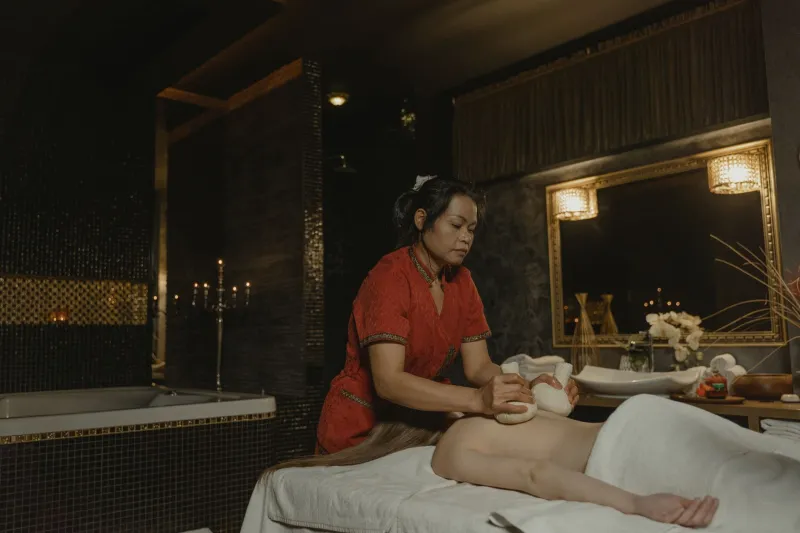
Why 3 PM Might Be the Smartest Time You've Never Considered for an Istanbul Massage

Photo: Ben Schumin, CC BY-SA 2.0, via Wikimedia Commons
The Stress Timeline Nobody Talks About
Everyone's heard the advice: work out in the morning, meditate before bed, front-load your healthy habits. It's practically gospel in American wellness culture. But here's the thing — that advice was largely built around one hormone, and most people have its daily schedule completely backwards.
Cortisol, the hormone your body releases in response to stress, doesn't behave the way most productivity gurus seem to think it does. Yes, it spikes sharply right after you wake up — that's called the cortisol awakening response, and it's actually a good thing. It's what gets you moving. But cortisol doesn't just disappear after your morning coffee. For a significant chunk of working adults, especially those in high-pressure jobs, cortisol levels climb again in the early-to-mid afternoon, typically somewhere between 2 and 4 PM.
For desk workers and executives grinding through back-to-back meetings, that second wave doesn't get discharged by a commute or a workout. It just sits there, quietly wrecking your focus, tightening your shoulders, and setting the stage for another night of restless sleep.
Why Morning Wellness Routines Miss the Mark for Professionals
Morning routines are great. Nobody's here to argue against a 6 AM run or a cold shower. But if your goal is specifically to interrupt a chronic stress cycle, timing your intervention before the stress has fully accumulated is a bit like putting on sunscreen after you've already been at the beach for three hours.
The science on this is genuinely interesting. Research on HPA axis regulation — that's the hypothalamic-pituitary-adrenal system that controls cortisol release — suggests that therapeutic touch, including massage, can measurably lower cortisol levels and elevate oxytocin and serotonin. But the magnitude of that shift may be more dramatic when your baseline cortisol is already elevated. In other words, a massage at 3 PM when you're wound tight from a full workday could produce a more pronounced physiological reset than the same massage at 7 AM when your body is still in its natural post-awakening wind-down.
This isn't fringe theory. Studies published in journals like the International Journal of Neuroscience have documented significant cortisol reductions following massage therapy sessions. The implication for timing is something most American wellness culture hasn't caught up with yet.
Where Istanbul's 24-Hour Spa Culture Gets It Right
Here's where Istanbul becomes genuinely relevant to this conversation — and not just as a travel backdrop.
Istanbul has a deeply embedded culture of round-the-clock wellness access. Hammams, traditional Turkish baths, have operated at all hours for centuries. The city's modern massage and spa scene has built on that foundation, with a robust network of therapists and wellness centers available well outside the typical 9-to-5 window that constrains most American spas.
What that means practically is that if you're a business traveler landing in Istanbul after a transatlantic flight, or a tourist whose afternoon has dissolved into bureaucratic chaos, or even just someone who finally gets a break at 3:30 PM — there's somewhere to go. No appointment booked three weeks in advance. No waiting until the weekend.
That flexibility isn't just convenient. It's physiologically significant. The ability to act when your body actually needs intervention, rather than when your calendar permits, is a meaningful advantage.
The Afternoon Window: What It Looks Like in Practice
So what does a mid-afternoon Istanbul massage session actually do for a stressed-out professional?
Start with the mechanical effects. A skilled therapist working on chronically contracted trapezius muscles — the ones that creep up toward your ears when you've been staring at a screen — is directly addressing the physical storage site of accumulated tension. Cortisol doesn't just exist in your bloodstream; its effects are written into your muscle tissue, your fascia, your posture.
Then there's the parasympathetic nervous system response. Massage reliably activates the "rest and digest" branch of your autonomic nervous system, which is the direct physiological counterweight to the stress response. When that switch gets flipped during your cortisol peak — rather than hours before or after it — you're essentially intercepting the stress cycle at its most active point.
The downstream effects matter too. Professionals who manage to genuinely decompress mid-afternoon often report sharper cognitive performance in the hours that follow. That's not mystical; it's what happens when you clear neurological noise. Your prefrontal cortex, which handles decision-making and complex thinking, functions better when it's not competing with a sustained stress signal.
A Practical Note for Visitors
If you're in Istanbul for work — and plenty of Americans pass through for business, given the city's position as a hub between European and Middle Eastern markets — the afternoon window is worth building into your schedule deliberately.
Most business travelers default to morning gym sessions or late-night dinners. Both have their place. But a 60-to-90-minute massage between 2 and 4 PM, particularly after a morning of meetings, is a fundamentally different kind of recovery tool. You're not just relaxing. You're biochemically resetting before the second half of your day.
Istanbul's 24-hour wellness infrastructure makes this kind of strategic scheduling genuinely feasible. You don't have to choose between a productive afternoon and a recovery session. You can use one to fuel the other.
Rethinking the Wellness Calendar
American wellness culture is obsessed with the morning. There's a whole genre of bestselling books dedicated to what you do in the first 60 minutes after waking up. And look — mornings matter. But the body doesn't stop being a body at noon.
The cortisol paradox is this: the window when stress is most physiologically active, and therefore when therapeutic intervention could have the most impact, is almost universally ignored by conventional wellness scheduling. We treat our most stressed hours as a time to push through, not a time to respond.
Istanbul's always-open spa culture didn't design itself around cortisol research. It evolved organically from centuries of understanding that people need access to restoration at all hours, not just the socially convenient ones. But the result is a system that, somewhat accidentally, aligns better with human stress biology than most Western wellness programs do.
If you're passing through Istanbul — or even just reconsidering how you structure your own recovery routines — the 3 PM massage might be the most underrated appointment you've never made.